Our latest youtube video "A Conversation on the Future of Leadership with John Hope Bryant".
Full video can be viewed on our VIMEO site
(See previous video: The Meaning of the Midterm Elections with Mark Rozell)
Synopsis: As we wrap up one of the toughest years imaginable, we are finding many in our workforce are worn down by stress and worry, and morale is down. In LOVE LEADERSHIP, I make the case that there are two things in the world; there is love and there is fear, and what you don’t love you fear, and the reason that the world is all screwed up is that many of our so-called leaders have led by fear. I show leaders how to break away from the long-standing leadership style- one based on fear. Instead, I suggest that the best way to lead in both your professional and personal life is to figure out what you have to give others in a world obsessed with the question “what do I get?”
Bio: A Young Global Leader for the World Economic Forum, an Oprah's Angel Network award recipient, a TIME Magazine 50 (Leaders) for the Future (94'), John Hope Bryant is an entrepreneur, the founder, chairman and chief executive officer of Operation HOPE, the Inc. Magazine/CEO Read bestselling author of LOVE LEADERSHIP: The New Way to Lead in a Fear-Based World (Jossey-Bass), advisor to the current U.S. president as well as the last two sitting U.S. presidents, a thought leader, public speaker, and an innovator in the business of empowerment. Operation HOPE, America’s first non-profit social investment banking organization founded immediately following the Rodney King Riots of 1992 in South Central Los Angeles, now operates in 69 U.S. communities, South Africa and Haiti, having served more than one million individuals, has more than 10,000 HOPE Corps volunteers, 5,000 partners from government, community (including faith) and the private sector, has raised more than $500 million and helped to restructure another $300 million in subprime mortgages from the private sector to empower the poor, for a total of approximately $900 million in economic activity for the under-served. John Hope Bryant was born on February 6, 1966, at Good Samaritan Hospital in Los Angeles, California, and resides in Atlanta, Georgia. Mr. Bryant is a member of 100 Black Men of Atlanta and attends Ebenezer Church in Atlanta, Georgia.
Tuesday, January 4, 2011
Sunday, January 2, 2011
A Movement Originating Its Own Models by Fethullah Gulen - Fountain Magazine
Below is a preview to an article by Fethullah Gulen that will go to print in the February 2011 issue of The Fountain Magazine. It summarizes, for the many volunteers, the sentiments they carry as they play a role in the global civic and social movement known as the Hizmet (Service) Movement (aka the Gulen Movement)
A Movement Originating Its Own Models
M. Fethullah GULEN, The Fountain Magazine, February 2011
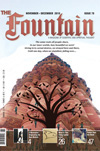 In this article I would like to discuss a legend; to talk about it is a duty, and therefore it is difficult to put it into words. However, I wonder if it is possible to describe in the scope of such an article an important resurrectional movement, a movement that has thrived in every part of the world, budding, giving off shoots and seedlings. I think not. What I know about the issue comes only from the videos I have seen. My attestation relies on what I have heard. The limits of my pen are those of my comprehension. I do not know to what era the implication of all that has been happening belongs. Now tell me what can be told under these circumstances. All I can do in describing this will be like someone attempting to describe roses and flowers as they really are after only seeing a picture of a rose or a flower. But my task resembles more an attempt to describe the unique pattern, accent, and manner of each flower and rose in a garden by merely looking at the picture of a dead rose; the rose garden nor the flower garden cannot be described in this way. Even so, I believe that one should dare to talk on behalf of the phenomenon of the era to galvanize people of letters and conscience. If some people close to God will be inspired as a result of this article, I think then that my aim has been achieved.
No matter how expressive and stylishly it is told, what matters is that this important phenomenon of the era should be related. It should, after all, be related so that we add a footnote to history and show our respect for those devoted people who performed such heroic deeds. If, on the other hand, this soft breeze, this warm atmosphere, this fresh thought and this love, and the gentle winds felt across the globe were to be described very briefly, it would be disrespectful toward the noble traits, such as magnanimity and altruism.
This movement is a phenomenon to be written about and underscored. A few dozen passionate people set off in all directions for the sake of God without stopping to think about their longings or their feelings of separation and without uttering the words “foreign lands” or “unknown places” at a time when nobody could even fathom what lay ahead. They were full of determination, firm of intention, and self-reliant. They suppressed their love for their country and their homeland, replacing it with a love for mission. They were aware of their efforts for the cause of God as few have been, they lived as such, and they walked to the east and to the west saying:
We have entered the path of love,
We are lovesick.
Nigari
At the most colorful period of their lives, when worldly pleasures and material objectives attract young people with an irresistible lure, and when physicality oppresses the hearts and minds of a person, they virtually flew to all these places with a passion for accomplishment that suppressed the various desires and compulsions; the excitement of those in the first row was in their hearts. This flight abroad was not like the departure of lovelorn youths who chased a false siren that had entered their lives at an unlucky time, those youths who pursued their dreams for a lifetime, who became lovesick, and who were strangers to their own nature, yet unable to reach the desired goal. The mission of these youths was from the heart and based on emotions, on consciousness, and determination; it had a depth of good faith and sincerity. You could say that these were the usual dynamics of faith, the natural conditions of divine ambition, the ideals of the devoted, the guides of the Infinite Light, or the efforts of those who had abandoned their selves and their beloved ones in order to express themselves. Indeed, they were neither prevented by their own shortcomings nor did they surrender to the obstacles in their way; they walked to the far corners of the world, the only never-fading love in their hearts being God’s favor and the ambition to meet Him. They walked; the roads took pride in this, the angels cheered them on, and, naturally, the devils beat their breasts. They walked; they had neither horses nor cars, nor weapons, nor ammunition. Their source of energy was their incredible faith and the excitement in their hearts that seethed like magma; on the horizon was the happiness of humanity, consent, and pleasure. Their destiny equaled that of the Companions and the Apostles. Soon after dawn they attained, with their chastity and purity, a manner that was tantamount to kinship with the angels. They became a theme for legends and a thing of never fading memory. They brought streams of light from eternity wherever they went. They lit a fire all around; the flame, ember, and smoke of this fire was happiness. The spell of tyranny and darkness gave way. The disbelieving bats were deprived of their sleep, and darkness unceasingly grumbled. Lies, calumny, and intrigue were hindered once again. All this made boorish thoughts and bigotry intolerably arrogant, making it want to tread on others’ ideas and set up traps for faith. However, all opposition was in vain: the light shone everywhere. The light that radiated from eternity embraced the entire world. Now it was the time and the epoch of the bright souls, although the murky situation still prevailed and the horizons were foggy, but the magic of darkness and the boorish thoughts were already undone.
Now it was the turn of the bright souls to speak. Humanity would discover itself through them and take its true place in the hierarchy of creation. Therefore, it was a generation that had long been awaited. As people had been waiting for them, wherever they went they always bent double as a consequence of their reverence for God and their respect for humanity, their eyes fixed on the doorway of the Most Gracious, meekly and humbly, awaiting the time when showers of light would be unleashed, while their heads and feet touched the ground. No matter how the people of today assess the issue, these were the children of tomorrow; the bright future bore their secrets. These lucky people, who were the apostles of resurrection, each in their own way, held the flowers of friendship in their hands and the verses of brother and sisterhood on their lips. Their tongues, sharper than sharpest swords, were nourished by Qur’anic waterfalls and their words had divine dimensions. These words destroyed darkness, but did not harm anyone. They brought the sound of the rivers of Paradise within earshot, but they did not lead to a longing for Paradise. In fact, these people needed neither hands nor tongues. Their pure faces that reminded one of God wherever seen were so magical that words stumbled in the presence of the meanings that emanated from their manners, and tongues became mute. Even their shadows burned the night moths; not to mention their light, which dazzled anyone that came near. We rightfully say, “Tongues and words have nothing to say in the presence of actions. When manners speak, is there a need for speech?” They are the representatives of this truth. There have always been multitudes of good people on the Earth; however, the manners and words of this latest group are entirely different. I can hardly say that they were singular or unique, but were I asked to explain how they were, I would not be able to immediately reply. I would probably say, “They look like angels,” and give up there.
Wherever these bright souls go, dry deserts turned into gardens of Eden thanks to the light they radiated. Much coal has been transformed into diamonds. Natures made of mud and stone have ascended to the rank of gold and silver. And everybody is talking about them now, waiting for the days when the love, brotherhood, and tolerance they promised will be realized. Today, only those who confuse darkness and light and who spend their lives in the realm of physicality are speaking against them. The bats are uneasy. The wolves and jackals are baring their teeth. The fools are restless. I find all these natural, and say, “Everybody exhibits his or her true nature.”
Whatever happens, despite those who blow out the candles, these men and women have long illuminated the hearts that are thirsty for light wherever they go, they warn the pure natures of what lies behind things and events, and they announce the universal human values to unspoiled souls.
I firmly believe that, just as intercontinental obstacles were once overcome thanks to the Qur’an, and love, respect, and dialogue were permanently established, a new ground for reconciliation has been or will be founded by the efforts of these lucky people today. Humanity used to recognize our nation, with its smiling face and fortunate destiny. Why should this very fact not also be true today? A flood of love among the people has started overflowing in almost every place that these bearers of the mission visit. There have been breezes of happiness and gladness, one after another, that can be felt all around. Moreover, islands of peace, which we can call invulnerable castles of harmony and stability, are forming near and far.
Who knows, maybe in the near future, thanks to these volunteers who devote themselves to letting others live, the mind and soul will embrace each other once again; conscience and logic will become complementary depths of each other; physics and metaphysics will stop fighting and withdraw to their own realms, and everything will find the opportunity to express the beauty in its own nature through its own language, the intricacy of legislative rules and the principles of creation will be rediscovered, people will regret having fought each other over nothing, an atmosphere of peace that was not previously established in the marketplaces, in the schools and homes will be established, and breezes of happiness will blow, chastity will not be violated, honesty will not be oppressed, hearts will always breathe respect and esteem, no one will envy others, their property or their reputation, the powerful will treat the weak justly, the weak and the poor will have the chance to live humanely, nobody will be arrested on the strength of mere suspicions, no dwelling or workplace will be raided, nobody’s blood will be shed and the weak will not cry, everybody will adore God and love humanity. It is only then that this world, which is the hallway to Paradise, will become an Eden that is fascinating to live in.
see also:
Fethullah Gulen: Following in the Footsteps of Rumi by Thomas Michel
SEE ALSO BELOW ARTICLES BY FETHULLAH GULEN
The Necessity of Interfaith Dialogue
Mevlana Jalal al-Din Rumi
Sufism And Its Origins
1. The author has dedicated this article to countless educational activists who have gone all around the world, with a motivation to provide quality education and to promote peace between different nations and cultures. All throughout his life and career Gülen has preached the importance of education and directed his audience to participate in and support educational activities.
2. Seyyid Nigari: A famous poet of Azerbaijan. He was an important representative of nineteenth
century mystical poetry.
A Movement Originating Its Own Models
M. Fethullah GULEN, The Fountain Magazine, February 2011
In this article I would like to discuss a legend; to talk about it is a duty, and therefore it is difficult to put it into words. However, I wonder if it is possible to describe in the scope of such an article an important resurrectional movement, a movement that has thrived in every part of the world, budding, giving off shoots and seedlings. I think not. What I know about the issue comes only from the videos I have seen. My attestation relies on what I have heard. The limits of my pen are those of my comprehension. I do not know to what era the implication of all that has been happening belongs. Now tell me what can be told under these circumstances. All I can do in describing this will be like someone attempting to describe roses and flowers as they really are after only seeing a picture of a rose or a flower. But my task resembles more an attempt to describe the unique pattern, accent, and manner of each flower and rose in a garden by merely looking at the picture of a dead rose; the rose garden nor the flower garden cannot be described in this way. Even so, I believe that one should dare to talk on behalf of the phenomenon of the era to galvanize people of letters and conscience. If some people close to God will be inspired as a result of this article, I think then that my aim has been achieved.No matter how expressive and stylishly it is told, what matters is that this important phenomenon of the era should be related. It should, after all, be related so that we add a footnote to history and show our respect for those devoted people who performed such heroic deeds. If, on the other hand, this soft breeze, this warm atmosphere, this fresh thought and this love, and the gentle winds felt across the globe were to be described very briefly, it would be disrespectful toward the noble traits, such as magnanimity and altruism.
This movement is a phenomenon to be written about and underscored. A few dozen passionate people set off in all directions for the sake of God without stopping to think about their longings or their feelings of separation and without uttering the words “foreign lands” or “unknown places” at a time when nobody could even fathom what lay ahead. They were full of determination, firm of intention, and self-reliant. They suppressed their love for their country and their homeland, replacing it with a love for mission. They were aware of their efforts for the cause of God as few have been, they lived as such, and they walked to the east and to the west saying:
We have entered the path of love,
We are lovesick.
Nigari
At the most colorful period of their lives, when worldly pleasures and material objectives attract young people with an irresistible lure, and when physicality oppresses the hearts and minds of a person, they virtually flew to all these places with a passion for accomplishment that suppressed the various desires and compulsions; the excitement of those in the first row was in their hearts. This flight abroad was not like the departure of lovelorn youths who chased a false siren that had entered their lives at an unlucky time, those youths who pursued their dreams for a lifetime, who became lovesick, and who were strangers to their own nature, yet unable to reach the desired goal. The mission of these youths was from the heart and based on emotions, on consciousness, and determination; it had a depth of good faith and sincerity. You could say that these were the usual dynamics of faith, the natural conditions of divine ambition, the ideals of the devoted, the guides of the Infinite Light, or the efforts of those who had abandoned their selves and their beloved ones in order to express themselves. Indeed, they were neither prevented by their own shortcomings nor did they surrender to the obstacles in their way; they walked to the far corners of the world, the only never-fading love in their hearts being God’s favor and the ambition to meet Him. They walked; the roads took pride in this, the angels cheered them on, and, naturally, the devils beat their breasts. They walked; they had neither horses nor cars, nor weapons, nor ammunition. Their source of energy was their incredible faith and the excitement in their hearts that seethed like magma; on the horizon was the happiness of humanity, consent, and pleasure. Their destiny equaled that of the Companions and the Apostles. Soon after dawn they attained, with their chastity and purity, a manner that was tantamount to kinship with the angels. They became a theme for legends and a thing of never fading memory. They brought streams of light from eternity wherever they went. They lit a fire all around; the flame, ember, and smoke of this fire was happiness. The spell of tyranny and darkness gave way. The disbelieving bats were deprived of their sleep, and darkness unceasingly grumbled. Lies, calumny, and intrigue were hindered once again. All this made boorish thoughts and bigotry intolerably arrogant, making it want to tread on others’ ideas and set up traps for faith. However, all opposition was in vain: the light shone everywhere. The light that radiated from eternity embraced the entire world. Now it was the time and the epoch of the bright souls, although the murky situation still prevailed and the horizons were foggy, but the magic of darkness and the boorish thoughts were already undone.
Now it was the turn of the bright souls to speak. Humanity would discover itself through them and take its true place in the hierarchy of creation. Therefore, it was a generation that had long been awaited. As people had been waiting for them, wherever they went they always bent double as a consequence of their reverence for God and their respect for humanity, their eyes fixed on the doorway of the Most Gracious, meekly and humbly, awaiting the time when showers of light would be unleashed, while their heads and feet touched the ground. No matter how the people of today assess the issue, these were the children of tomorrow; the bright future bore their secrets. These lucky people, who were the apostles of resurrection, each in their own way, held the flowers of friendship in their hands and the verses of brother and sisterhood on their lips. Their tongues, sharper than sharpest swords, were nourished by Qur’anic waterfalls and their words had divine dimensions. These words destroyed darkness, but did not harm anyone. They brought the sound of the rivers of Paradise within earshot, but they did not lead to a longing for Paradise. In fact, these people needed neither hands nor tongues. Their pure faces that reminded one of God wherever seen were so magical that words stumbled in the presence of the meanings that emanated from their manners, and tongues became mute. Even their shadows burned the night moths; not to mention their light, which dazzled anyone that came near. We rightfully say, “Tongues and words have nothing to say in the presence of actions. When manners speak, is there a need for speech?” They are the representatives of this truth. There have always been multitudes of good people on the Earth; however, the manners and words of this latest group are entirely different. I can hardly say that they were singular or unique, but were I asked to explain how they were, I would not be able to immediately reply. I would probably say, “They look like angels,” and give up there.
Wherever these bright souls go, dry deserts turned into gardens of Eden thanks to the light they radiated. Much coal has been transformed into diamonds. Natures made of mud and stone have ascended to the rank of gold and silver. And everybody is talking about them now, waiting for the days when the love, brotherhood, and tolerance they promised will be realized. Today, only those who confuse darkness and light and who spend their lives in the realm of physicality are speaking against them. The bats are uneasy. The wolves and jackals are baring their teeth. The fools are restless. I find all these natural, and say, “Everybody exhibits his or her true nature.”
Whatever happens, despite those who blow out the candles, these men and women have long illuminated the hearts that are thirsty for light wherever they go, they warn the pure natures of what lies behind things and events, and they announce the universal human values to unspoiled souls.
I firmly believe that, just as intercontinental obstacles were once overcome thanks to the Qur’an, and love, respect, and dialogue were permanently established, a new ground for reconciliation has been or will be founded by the efforts of these lucky people today. Humanity used to recognize our nation, with its smiling face and fortunate destiny. Why should this very fact not also be true today? A flood of love among the people has started overflowing in almost every place that these bearers of the mission visit. There have been breezes of happiness and gladness, one after another, that can be felt all around. Moreover, islands of peace, which we can call invulnerable castles of harmony and stability, are forming near and far.
Who knows, maybe in the near future, thanks to these volunteers who devote themselves to letting others live, the mind and soul will embrace each other once again; conscience and logic will become complementary depths of each other; physics and metaphysics will stop fighting and withdraw to their own realms, and everything will find the opportunity to express the beauty in its own nature through its own language, the intricacy of legislative rules and the principles of creation will be rediscovered, people will regret having fought each other over nothing, an atmosphere of peace that was not previously established in the marketplaces, in the schools and homes will be established, and breezes of happiness will blow, chastity will not be violated, honesty will not be oppressed, hearts will always breathe respect and esteem, no one will envy others, their property or their reputation, the powerful will treat the weak justly, the weak and the poor will have the chance to live humanely, nobody will be arrested on the strength of mere suspicions, no dwelling or workplace will be raided, nobody’s blood will be shed and the weak will not cry, everybody will adore God and love humanity. It is only then that this world, which is the hallway to Paradise, will become an Eden that is fascinating to live in.
see also:
Fethullah Gulen: Following in the Footsteps of Rumi by Thomas Michel
SEE ALSO BELOW ARTICLES BY FETHULLAH GULEN
The Necessity of Interfaith Dialogue
Mevlana Jalal al-Din Rumi
Sufism And Its Origins
Notes
1. The author has dedicated this article to countless educational activists who have gone all around the world, with a motivation to provide quality education and to promote peace between different nations and cultures. All throughout his life and career Gülen has preached the importance of education and directed his audience to participate in and support educational activities.2. Seyyid Nigari: A famous poet of Azerbaijan. He was an important representative of nineteenth
century mystical poetry.


Friday, December 31, 2010
MEDIA - The New Republic: The Global Imam
The New Republic recently published a feature article by Suzy Hansen titled The Global Imam on Rumi Forum's Honorary President, Fethullah Gulen. Excerpts are below:

 The Global Imam
by Suzy Hansen, The New Republic December 2, 2010
THE LEADER OF what is arguably the world’s most successful Islamic movement lives in a tiny Pennsylvania town called Saylorsburg, at the Golden Generation Worship and Retreat Center, otherwise known as “the Camp.” The Camp consists of a series of houses, a community center, a pond, and some tranquil, woodsy space for strolling. From this Poconos enclave--which resembles a resort more than the headquarters of a worldwide religious, social, and political movement--Fethullah Gülen, a 69-year-old Turkish bachelor with a white moustache, wide nose, and gentle, sad expression, leads perhaps five million followers who, in his spirit if not his name, operate schools, universities, corporations, nonprofits, and media organs around the globe.
Last spring, I visited the center and was warmly shepherded around by Bekir Aksoy, the president of the Camp. Just past a checkpoint, a portly Turkish man in a “Sopranos”-esque tracksuit was stretching, preparing for a jog. Along a road leading to the pond, we encountered a group composed mostly of Turkish men who had come from Japan to see Hocaefendi, as Gülen is respectfully called by his followers; they had been escorted onto the premises by a Columbia University student in a white Mercedes. The guest of honor for the day was a professor from the Jewish Theological Seminary in New York. He was fishing for trout...
...Gülen’s views are moderate and modern. He is fiercely opposed to violence and enthusiastic about science. According to Gülen, “avoiding the physical sciences due to the fear that they will lead to heresy is childish.” He is emphatically not a radical Islamist. “The lesser jihad is our active fulfillment of Islam’s commands and duties,” he has written, and “the greater jihad is proclaiming war on our ego’s destructive and negative emotions and thoughts ... which prevent us from attaining perfection.” ....... His followers run nonprofit organizations that promote peace, tolerance, and interfaith dialogue, and Gülenist businessmen devote their resources to building secular schools.
It’s no surprise, then, that Gülen has many admirers in the West. “It’s a civic movement,” says Islam scholar John Esposito, one of many American academics who praise the Gülenists. “It’s an alternative elite within Turkish society, as in many Muslim societies, that can be modern, educated, and successful, but also religiously minded.” Particularly after September 11, Gülen’s movement had a lot of appeal in the United States, which was suddenly desperate for “good Muslims.” “It was 2003, two years after 9/11; we were just in the beginning of the Iraq war, and here’s this ecumenical Muslim movement that seems to be open to modernity and science and is focused on education,” said one senior U.S. government official who has had dealings with Gülenists. “It seemed almost too good to be true.”...
With the help of Turkish businessmen, Gülen began building dorms, or “lighthouses.” At the time, Turkey was urbanizing at a breakneck pace. Country kids often floundered, socially and financially, when they moved to the big cities. The “lighthouses” provided a religious community for these young people, one that offered help with academics and didn’t, say, watch porn or get carried away with leftist causes.
Within these safe havens, the Gülen movement introduced the pious to the possibilities of modern life. “My father was a teacher in a primary school. His father was a stonecutter,” says Kerim Balcı, a journalist who works for the newspaper Zaman, which is owned by Gülenists and claims to have the largest readership in Turkey. “And here I am a Ph.D. student, columnist, and academician probably earning my father’s yearly salary in a month.” Balcı’s life story--he hails from the small Black Sea city of Samsun, yet went on to receive his master’s from a university in Israel and is working toward his Ph.D. from Durham University in Britain--echoes the trajectory of many middle-aged Gülen followers from conservative families. The Turkish state had been founded on the notion that modernity meant rejection of religion--and, for a long time, it was dominated by a military and a political class that enforced this ideal, sometimes harshly. Gülen suggested there was an alternative path. “It may be possible to be both religious and a TV commentator,” Balcı says....
....Even as the movement has sprouted numerous organizations and companies, the schools have remained at the center of the Gülen orbit. Starting with the collapse of the Soviet Union in 1991, Gülen dispatched his students to the former Soviet republics of Central Asia, where he rightly suspected that they might find some post-communist youths in need of religion. But it is not just Central Asia that hosts Gülen schools. They also exist in far-flung Muslim countries like Indonesia, Sudan, and Pakistan, as well as mostly non-Muslim countries like Mexico and Japan. In total, according to Ebaugh, Gülenists operate over 1,000 explicitly secular schools and universities in more than 100 countries. They emphasize science and technology, teach the Turkish language, and, by many accounts, are very good schools. Gülenist businessmen build these institutions and sponsor scholarships to them. Whenever you ask who’s funding anything, Gülenists reply “a group of Turkish businessmen,” “a Turkish businessman,” “a Turkish-American businessman,” or “our Turkish friends.”
When I recently visited Afghanistan, I was surprised to learn that Turks had been operating schools there since the ’90s, even during the Taliban era. They currently have schools not just in Kabul, but in Mazar-e-Sharif, Herat, Shebhergan, and Kandahar. Behind the lovely painted-pink school in Kabul were dorms where kids from all over the country sat outside, some of them eager to say hello in English. Every Afghan I spoke to in Kabul, from politicians to cooks, told me that “the Turkish school” was the best in the city. As we left the premises, the teachers gave my Afghan translator some books by Fethullah Gülen....[continues]
SUGGESTED MEDIA LINKS on FETHULLAH GULEN
http://rumiforum.blogspot.com/2010/09/rumi-forum-suggested-links-has-been.html
SEE ALSO BELOW ARTICLES BY FETHULLAH GULEN
The Necessity of Interfaith Dialogue
A Movement Originating Its Own Models
Mevlana Jalal al-Din Rumi
Sufism And Its Origins
FULL ARTICLE TEXT:http://fethullah-gulen.idcnj.org/index.php?option=com_content&view=article&id=207:the-global-imam&catid=83:op-eds&Itemid=199
ORIGINAL SOURCE:http://www.tnr.com/article/world/magazine/79062/global-turkey-imam-fethullah-gulen
by Suzy Hansen, The New Republic December 2, 2010
THE LEADER OF what is arguably the world’s most successful Islamic movement lives in a tiny Pennsylvania town called Saylorsburg, at the Golden Generation Worship and Retreat Center, otherwise known as “the Camp.” The Camp consists of a series of houses, a community center, a pond, and some tranquil, woodsy space for strolling. From this Poconos enclave--which resembles a resort more than the headquarters of a worldwide religious, social, and political movement--Fethullah Gülen, a 69-year-old Turkish bachelor with a white moustache, wide nose, and gentle, sad expression, leads perhaps five million followers who, in his spirit if not his name, operate schools, universities, corporations, nonprofits, and media organs around the globe.
Last spring, I visited the center and was warmly shepherded around by Bekir Aksoy, the president of the Camp. Just past a checkpoint, a portly Turkish man in a “Sopranos”-esque tracksuit was stretching, preparing for a jog. Along a road leading to the pond, we encountered a group composed mostly of Turkish men who had come from Japan to see Hocaefendi, as Gülen is respectfully called by his followers; they had been escorted onto the premises by a Columbia University student in a white Mercedes. The guest of honor for the day was a professor from the Jewish Theological Seminary in New York. He was fishing for trout...
...Gülen’s views are moderate and modern. He is fiercely opposed to violence and enthusiastic about science. According to Gülen, “avoiding the physical sciences due to the fear that they will lead to heresy is childish.” He is emphatically not a radical Islamist. “The lesser jihad is our active fulfillment of Islam’s commands and duties,” he has written, and “the greater jihad is proclaiming war on our ego’s destructive and negative emotions and thoughts ... which prevent us from attaining perfection.” ....... His followers run nonprofit organizations that promote peace, tolerance, and interfaith dialogue, and Gülenist businessmen devote their resources to building secular schools.
It’s no surprise, then, that Gülen has many admirers in the West. “It’s a civic movement,” says Islam scholar John Esposito, one of many American academics who praise the Gülenists. “It’s an alternative elite within Turkish society, as in many Muslim societies, that can be modern, educated, and successful, but also religiously minded.” Particularly after September 11, Gülen’s movement had a lot of appeal in the United States, which was suddenly desperate for “good Muslims.” “It was 2003, two years after 9/11; we were just in the beginning of the Iraq war, and here’s this ecumenical Muslim movement that seems to be open to modernity and science and is focused on education,” said one senior U.S. government official who has had dealings with Gülenists. “It seemed almost too good to be true.”...
With the help of Turkish businessmen, Gülen began building dorms, or “lighthouses.” At the time, Turkey was urbanizing at a breakneck pace. Country kids often floundered, socially and financially, when they moved to the big cities. The “lighthouses” provided a religious community for these young people, one that offered help with academics and didn’t, say, watch porn or get carried away with leftist causes.
Within these safe havens, the Gülen movement introduced the pious to the possibilities of modern life. “My father was a teacher in a primary school. His father was a stonecutter,” says Kerim Balcı, a journalist who works for the newspaper Zaman, which is owned by Gülenists and claims to have the largest readership in Turkey. “And here I am a Ph.D. student, columnist, and academician probably earning my father’s yearly salary in a month.” Balcı’s life story--he hails from the small Black Sea city of Samsun, yet went on to receive his master’s from a university in Israel and is working toward his Ph.D. from Durham University in Britain--echoes the trajectory of many middle-aged Gülen followers from conservative families. The Turkish state had been founded on the notion that modernity meant rejection of religion--and, for a long time, it was dominated by a military and a political class that enforced this ideal, sometimes harshly. Gülen suggested there was an alternative path. “It may be possible to be both religious and a TV commentator,” Balcı says....
....Even as the movement has sprouted numerous organizations and companies, the schools have remained at the center of the Gülen orbit. Starting with the collapse of the Soviet Union in 1991, Gülen dispatched his students to the former Soviet republics of Central Asia, where he rightly suspected that they might find some post-communist youths in need of religion. But it is not just Central Asia that hosts Gülen schools. They also exist in far-flung Muslim countries like Indonesia, Sudan, and Pakistan, as well as mostly non-Muslim countries like Mexico and Japan. In total, according to Ebaugh, Gülenists operate over 1,000 explicitly secular schools and universities in more than 100 countries. They emphasize science and technology, teach the Turkish language, and, by many accounts, are very good schools. Gülenist businessmen build these institutions and sponsor scholarships to them. Whenever you ask who’s funding anything, Gülenists reply “a group of Turkish businessmen,” “a Turkish businessman,” “a Turkish-American businessman,” or “our Turkish friends.”
When I recently visited Afghanistan, I was surprised to learn that Turks had been operating schools there since the ’90s, even during the Taliban era. They currently have schools not just in Kabul, but in Mazar-e-Sharif, Herat, Shebhergan, and Kandahar. Behind the lovely painted-pink school in Kabul were dorms where kids from all over the country sat outside, some of them eager to say hello in English. Every Afghan I spoke to in Kabul, from politicians to cooks, told me that “the Turkish school” was the best in the city. As we left the premises, the teachers gave my Afghan translator some books by Fethullah Gülen....[continues]
SUGGESTED MEDIA LINKS on FETHULLAH GULEN
http://rumiforum.blogspot.com/2010/09/rumi-forum-suggested-links-has-been.html
SEE ALSO BELOW ARTICLES BY FETHULLAH GULEN
The Necessity of Interfaith Dialogue
A Movement Originating Its Own Models
Mevlana Jalal al-Din Rumi
Sufism And Its Origins
FULL ARTICLE TEXT:http://fethullah-gulen.idcnj.org/index.php?option=com_content&view=article&id=207:the-global-imam&catid=83:op-eds&Itemid=199
ORIGINAL SOURCE:http://www.tnr.com/article/world/magazine/79062/global-turkey-imam-fethullah-gulen
Thursday, December 30, 2010
NEW VIDEO - The Meaning of the Midterm Elections with Mark Rozell
Our latest youtube video "The Meaning of the Midterm Elections with Mark Rozel".
Full video can be viewed on our VIMEO site
(See previous video : Peace and Conflict Resolution in Islam with Qamar ul Huda)
An analysis of the outcome of the 2010 U.S. Midterm elections and its impact on the next two years of the Obama presidency.
Synopsis: The presentation and discussion will focus on an analysis of the 2010 election results and their implications for governing in the U.S. The analysis will center on the factors that most influenced the election and the current state of voter discontent with both political parties in the U.S.
Bio: Mark J. Rozell is professor of public policy at George Mason University. He is the author of nine books and editor of twenty additional books on various topics in American government and politics. He writes most frequently on the presidency and executive power, religion and politics, media and politics, and U.S. elections at the state and national levels.
Full video can be viewed on our VIMEO site
(See previous video : Peace and Conflict Resolution in Islam with Qamar ul Huda)
An analysis of the outcome of the 2010 U.S. Midterm elections and its impact on the next two years of the Obama presidency.
Synopsis: The presentation and discussion will focus on an analysis of the 2010 election results and their implications for governing in the U.S. The analysis will center on the factors that most influenced the election and the current state of voter discontent with both political parties in the U.S.
Bio: Mark J. Rozell is professor of public policy at George Mason University. He is the author of nine books and editor of twenty additional books on various topics in American government and politics. He writes most frequently on the presidency and executive power, religion and politics, media and politics, and U.S. elections at the state and national levels.
Tuesday, December 28, 2010
BELGIUM - University of Leuven establishes Fethullah Gülen Chair
The University of Leuven honors Rumi Forum's honorary president by establishing the Fethullah Gülen Chair for Intercultural Studies inaugurated on 7 December 2010.
A chair named after the well-respected Turkish scholar Fethullah Gülen has been established at one of Belgium’s most prestigious Catholic universities, the Catholic University of Leuven, with university officials saying it is a source of pleasure for them to have a chair named after Gülen.
The Fethullah Gülen Chair for Intercultural Studies was established with the efforts of the Brussels-based mus (IDP), whose honorary chairman is Gülen. An inauguration ceremony was held on Monday at the university. As part of an agreement signed between the IDP and the university, the chair will carry out academic research and organize conferences for five years.
Social and Cultural Anthropology Professor Johan Leman, who will be the chair holder, and university Rector Mark Waer expressed pleasure to host the chair. In a statement he released on the occasion of the establishment of the chair, Leman said that as an intellectual and spiritual leader, Gülen has encouraged his Muslim fellows to take initiatives to build bridges, particularly between Islam and modernity, science and spirituality, and reason and faith.
Noting that he has motivated millions to engage and invest in sustaining peace and improving community relations through nondenominational education and intercultural dialogue, Leman said Gülen’s recognition of democracy as the only viable political system of governance and his emphasis on diversity, equal access to human rights, freedom of belief for all, loyalty to the law of the land and the non-instrumentalization of religion in politics make his message one of the most promising calls for the future of relations between the West and the Muslim community.
“His message now has a growing influence, particularly among the second-generation migrant-origin citizens of Europe. It is our hope that this chair, inspired by this message, will contribute to the bridge-building process through promoting intercultural understanding and stimulating research on relations between Muslim communities and the wider society in Belgium and Europe,” he said. Gülen is a Turkish Islamic scholar well known for his teachings promoting mutual understanding and tolerance between cultures. One of the world’s most influential Islamic scholars, Gülen came out at the top of the list of “The World’s Top 20 Public Intellectuals” by the magazines Foreign Policy and Prospect in 2008. Now residing in the US, Gülen has pioneered educational activities in a number of countries along with efforts to promote intercultural and interfaith activities around the world. He has written nearly 50 books in Turkish, some of which have been translated into several languages....
FULL STORY
see also
SUGGESTED MEDIA LINKS on FETHULLAH GULEN
http://rumiforum.blogspot.com/2010/09/rumi-forum-suggested-links-has-been.html
OFFICIAL UNIVERSITY WEB SITE and ANNOUNCEMENT
 |
| Officials from the Catholic University of Leuven have established a chair named after Turkish scholar Fethullah Gülen. |
The Fethullah Gülen Chair for Intercultural Studies was established with the efforts of the Brussels-based mus (IDP), whose honorary chairman is Gülen. An inauguration ceremony was held on Monday at the university. As part of an agreement signed between the IDP and the university, the chair will carry out academic research and organize conferences for five years.
Social and Cultural Anthropology Professor Johan Leman, who will be the chair holder, and university Rector Mark Waer expressed pleasure to host the chair. In a statement he released on the occasion of the establishment of the chair, Leman said that as an intellectual and spiritual leader, Gülen has encouraged his Muslim fellows to take initiatives to build bridges, particularly between Islam and modernity, science and spirituality, and reason and faith.
Noting that he has motivated millions to engage and invest in sustaining peace and improving community relations through nondenominational education and intercultural dialogue, Leman said Gülen’s recognition of democracy as the only viable political system of governance and his emphasis on diversity, equal access to human rights, freedom of belief for all, loyalty to the law of the land and the non-instrumentalization of religion in politics make his message one of the most promising calls for the future of relations between the West and the Muslim community.
“His message now has a growing influence, particularly among the second-generation migrant-origin citizens of Europe. It is our hope that this chair, inspired by this message, will contribute to the bridge-building process through promoting intercultural understanding and stimulating research on relations between Muslim communities and the wider society in Belgium and Europe,” he said. Gülen is a Turkish Islamic scholar well known for his teachings promoting mutual understanding and tolerance between cultures. One of the world’s most influential Islamic scholars, Gülen came out at the top of the list of “The World’s Top 20 Public Intellectuals” by the magazines Foreign Policy and Prospect in 2008. Now residing in the US, Gülen has pioneered educational activities in a number of countries along with efforts to promote intercultural and interfaith activities around the world. He has written nearly 50 books in Turkish, some of which have been translated into several languages....
FULL STORY
see also
SUGGESTED MEDIA LINKS on FETHULLAH GULEN
http://rumiforum.blogspot.com/2010/09/rumi-forum-suggested-links-has-been.html
OFFICIAL UNIVERSITY WEB SITE and ANNOUNCEMENT
- http://www.kuleuven.be/newsletter/newsflash/intercultural_chair
- http://soc.kuleuven.be/web/staticpage/3/7/eng/560
Subscribe to:
Posts (Atom)