Rumi Forum's blog on Hizmet, Fethullah Gulen, peacebuilding, education and interfaith efforts.

Showing posts with label scholar. Show all posts

Tuesday, September 10, 2013

Fethullah Gulen: "Neither Now, Nor in the Future Should Our Friends Have Any Ambition for Government"

This is a part of an interview with Fethullah Gulen by Mehmet Gundem of Milliyet Daily in January 2005.

Have you written a will?

I had written a will a long time ago. In this, I requested to be buried wrapped in my robe, and with my turban (the traditional garment of a Muslim scholar). The money in my wallet now will suffice to pay for my shroud and funeral expenses. I don't want the copyright money to be used for matters of burial; I am not sure whether it will be correct. I don't want it to be paid for by my pension, which would mean the state is paying for it, either; this is why I keep this money for my funeral. I bought some of my books with my pension; I regard them as being bought by the state; some of my books were presented to me by some publishing houses, for I am a scholar. They did this because of my position. Therefore, just as I keep the presents sent by people in my collections and present them back to the nation again, I have willed my books and personal belongings to be donated to the establishment in which they are found.

There used to be some friends who paid for the tea they drank or the food they ate. I mentioned them in my will or if they're not alive, their families; I hope that they will be pleased by being given of what I have left behind. Before I came here, I wrote that if I died somewhere away (from Turkey), there would be no need to undergo extra expenses in taking my body back to Turkey, but I am not easy about this decision. I wish to be buried in Turkey next to my father or mother.

As for the movement; neither now, nor in the future should our friends have any ambition for government, they should not be engaged in politics, even if all the power and pomp of the world is laid at their feet; my friends who love me and heed my advice should not show a moment's hesitation to push all this away with the back of their hand. I had made similar statements at other times; even if others do not understand, let them seek good pleasure of God, let them strive sincerely in the path of glorifying the Name of God without a moment's lapse. Now I want to write a new will and clarify the details of such points.

You have been in the USA for six years [as of 2005]. How do Americans look on you?

I am not a well known person here. I haven't met anybody, other than a few people whom I had to accept for courtesy's sake.

Why don't you meet people?

When I came here in 1997, I met some people, for example those who worked in Turkey as diplomats, envoys, academicians, and priests. I came here due to my illness. Then when the storms (i.e., The June 1999 cassette conspiracy against Fethullah Gulen) broke out in Turkey, I thought it would be more appropriate to continue my treatment here. It was obvious that I would not be able to bear the events in Turkey with the health problems of my heart, blood pressure, cholesterol, etc. I was in America , but I stayed away from America . There were rumors like the green belt claims, and they made an association with us and America 's projects. I did not meet anybody, for I did not want to prepare ground for improper claims, I did not accept any of the offers to give conferences at universities.

My place is in my country with its earth and stone, among my nation. Recently, the Turks here have started carrying out some activities here, and expressing themselves. In this way some people have gotten to know me through some of my books. These were people who accepted Islam for the sake of our friends and said, "Muhammad is the Messenger of God." I have met some people from the intellectuals and academicians who were curious about the movement.

How have the years in America affected you?

If we express it in the terminology of Islamic Jurisprudence, my staying here was choosing the better of two evils. I did not want to come here at all, but Dr. Sait insisted, and he stated that my health could not tolerate any neglect. Even if it was hard for me, I had to either be away from my country and my people, in a foreign state, or—as one of our statesmen said—I had to consent to face a new conspiracy everyday, where they made mountains out of molehills. After having consulted with my friends, I consented to bear homesickness in order not to witness the evil that was happening and to be offended by our own people. Although I knew the conspiracy (the montage tapes) beforehand, I saw some of it when it was broadcast. I did not read what the supporters of the conspirators wrote, in order not to hold a grudge against them.

How did you know about it beforehand?

A friend from the business world had come to visit me. His phone rang. Somebody called him and said "there are a sack-full of tapes, we are making a montage. The guys here said, 'don't let him know, you will lose your job' but anyway, I wanted to call." He also said things like "I hope you will not forget this favor of mine and you won't let me down." In a way, it was blackmail.

What is it that you miss most?

I miss everything from Turkey . Traveling, having a tea-break at the cafés on the way, everything (even) the way our people dress. It may be good, it may be flawed- but I miss our architecture. The sky-scrapers here may seem majestic, but our ground-scrapers seem more attractive to me.

You miss Turkey so much, but you don't return, why?

After a certain age, your body just can't handle it. As an Arab poet expressed, I keep away but prefer being there with my heart and conscience; nothing prevents me from feeling close. Let me tell it through a simile. In Sufism, there is a certain station above that of lovers. Those who reach that station even do not want to unite with the beloved (return to God). Namely, they say let me burn inside, let me always moan with the pain of separation, but I don't want union. I feel that such a pleasurable longing, a delightful pain of separation is deeper, more faithful, and more heartfelt.

Does this mean that you will not return?

There is no legal obstacle to my return. I have never given up thinking about returning to Turkey. I have had this inquired about from people in some important positions in Turkey. They said, "There's nothing wrong, he can come." But from the way they said "he can come," I sensed that I might give them a headache if I return.

You mean some people from the state?

Yes, someone asked the question "What does his return mean to you" to a person who had retired from an important position. He smiled but said "it would be better if he didn't." It is probably thought that my return may trigger some things. Like some people will provoke others to fill the streets, and cause unrest. I do not want to open a door that will lead to the present stability in Turkey being disturbed.

There are also those who worry that you will return like Khomeini.

Even if I return, I will return like myself, the son of Ramiz Gülen who served as an imam at a Mosque in Edirne for three years. It may sound funny to you, but I wonder whether they would let me serve as an imam at that mosque again, whether I could stay there in a corner as I used to. . . or if they even do not let me be the head of a Qur'an course in the Kestane Pazari, I wonder whether they would let me stay in a wooden cabin as I used to. Another thought that passes through my mind is, with all sincerity, that there is a guest house in my village which was built in a field belonging to my grandfather; I say let me go and stay there, and die like a villager in the village where I was born and grew up.

You say you wish to go to the village in which you were born, and to die there. Will you just go to the village and keep quiet?

I did not have expectations, but I had concerns in the world. I will just keep chanting the same concerns; whatever the conditions are, I will encourage those who value my words to eagerly go to corners of the world to pursue educational activities. Even when I am being put in the grave, if I can, I will say "go establish schools, don't give up striving to make Turkish a world language.

I will tell our businessmen to go all around the world as (fresh) shoots, and be trees, to constitute lobbies, and to support Turkey. I will keep on saying that it is impossible for Turkey to be detached from the world and to stand on its own. Even if they make a special law and seal my mouth, then I will write it with my hands or feet; again I will say the same things. I have already said all these openly in my sermons in mosques, as an employee of the state. Not to my "disciples," as they say. Not like other hodjas, I may have said "Develop Turkey, let the voice of the Turkish people be heard everywhere."

In my opinion, (genuine) nationalism can only be carried out in this way, not by paying lip service to the issue. The cause of Turkey is a great one. I will keep on saying the whole nation should back it, like it did the War of Independence. I don't know any laws that will silence me in this, nor not allow me to speak so. I will keep on saying these as a debt of faith to my nation.

Wednesday, July 10, 2013

MEDIA: Mandela and Gulen by Ibrahim Ozdemir

Mandela and Gülen by İbrahim Özdemir *


Illustration, Cem Kızıltuğ


1 July 2013
(This story was written during the darkest days of the so-called Feb. 28 process and was published in the Zaman daily on Dec. 21, 1999. Today the whole world is focused on Nelson Mandela who has been in hospital for the last few days. I think it is time to rethink the message given by two great leaders of our time, Mandela and Fethullah Gülen, a decade ago at the Parliament of the World's Religions. We join in the prayers for Mandela and wish these two great leaders health and peace.)


The Parliament of the World's Religions held its largest and final meeting of the century on Dec. 1-8, 1999 in the South African city of Cape Town.


As is known, this parliament held its first meeting in Chicago in 1893. The second gathering was again held in Chicago a hundred years later. Approximately 8,000 people from various religions and beliefs participated in the latter event and accepted the Declaration of a Global Ethic.

Search for solutions to mankind's problems

This point made by Parliament President Dr. Howard Sulkin was very important: The 20th century was the stage of two World Wars and many smaller ones. Emphasizing that approximately 200 million people had lost their lives in these wars, he said: “The scientific and technological advances in the 20th century caused many problems, the environmental crisis in particular. For this reason, it can be seen that many people are turning once again to spiritual traditions and religion as they enter a new century. All religions and their members have a great responsibility to make the 21st century an age of peace, tolerance and love. As was clearly seen in Communist Russia, it's not possible to destroy religious belief by using violence and force. In addition, taking a lesson from religious wars in history, an opportunity should not be given to those who want to make the 21st century a stage for a war of civilizations. For this reason, we all have to take on great responsibility. Protecting our differences and taking strength from our spiritual traditions, we must find solutions to mankind's problems.”

New turning point


As a result, the meeting held at Cape Town was very important and it appears that this will be a new turning point for all religions. Just like UN decisions, all decisions made here will be announced to the world and those acting contrary to these or those infringing on them will be publicly criticized and exposed. The most important aspect of this meeting, in which more than 6,000 people from different religions participated, was the fact that it was held in a spirit of civil initiative.


This meeting carried a unique meaning and Cape Town was specially selected. South Africa is not only a country of people whose people are black, but at the same time it is a country where one of this century's darkest, most dictatorial, racist and oppressive regimes came to power. For many years people had been segregated into groups according to color, language, race and religion and were ruled by a white, racist regime that comprised only 13 percent of the population. When you take into account the fact that South Africa's hero Mandela spent 28 years in prison and that the country had turned into a prison, the nature of the oppressive regime can be better understood. In addition, people had been divided into three categories: whites, mulattos and local blacks. Non-whites being able to enter white residential areas and certain districts in the city was dependent on “permission.”

However, all this oppression and persecution didn't stand for long against man's belief, honor and human rights and freedoms. The end came in 1994 when Mandela was elected president. Thus the underlying spirit of the Parliament of the World's Religions gathering here was: It is not possible to eliminate man's rights and freedoms and religious beliefs by means of force, oppression, violence or terror. In addition, one of the basic goals of the meeting was a discussion of religions' contribution to man's peace, security and a sustainable world.

Mandela: My belief kept me going


Participating in the meeting, Mandela made some very interesting points about the power of religion. Mandela is known by the slogan, “The Struggle Is My Life” and he endured unthinkable kinds and amounts of torture. “If I didn't have religious belief, I could not have endured oppression and torture. My faith was the basic motivation of my spirit of struggle. In other words, if I'm addressing you here today, it's a result of my religious faith and God's grace. Without this kind of faith it wouldn't be possible to withstand this kind of inhumane torture. As a result, many of my friends met ruin because they didn't have such faith,” he said. Concerning the role of religions, Mandela said: “While we were in prison, our connections with the outside world were cut. However, Muslim, Christian and Jewish religious people and groups didn't leave us all alone. With their help, we left prison as educated people. For this reason, in order for the 21st century to be a time of peace and not confrontation, great duties and responsibilities face religious people. In this respect, the significance of this parliament is even greater.”

Hocaefendi, Mandela and Dalai Lama


Everyone gave these views a standing ovation. Like Mandela, world-famous Tibetan monk the Dalai Lama was another leader who attracted a lot of attention. He was the center of attention, especially for Western youth and other groups. Pointing out the mission that awaits religions in the new millennium, the Dalai Lama emphasized the importance of dialogue among different faiths and civilizations. Even though he didn't attend the meeting, Fethullah Gülen Hocaefendi was another person who attracted attention with the message and presentations he sent in his stead. Hocaefendi was personally invited to the parliament, but he was unable to attend due to poor health. In spite of this, he sent a message of greetings and two presentations. In my opinion, this shows the importance and support Hocaefendi gave to the meeting, on the one hand, and to efforts for peace and tolerance among religions and civilizations on the other. Because of this, both the message and presentations were received with great interest. The West knows him not only for his wisdom and educational efforts, but also for his initiatives to build “Peace and Dialogue” on the foundations of love, mercy, accepting everyone as they are, mutual respect, human rights and justice. The image of his being received as a Muslim scholar by the Pope at the Vatican is preserved in Westerners' memories. The interest in him shown by international communities is interesting in light of the fact that despite all these constructive efforts, some people in Turkey persist in not recognizing Hocaefendi or in misinterpreting his message. For this reason, I believe it's necessary to underscore some of the points in Hocaefendi's presentations.


The first point Fethullah Hoca made regarding the parliament was the meaning the 21st century has for all religions. “Every new dawn, every new day, every spring, every new century and millennium in human history means a new beginning and new hope. In this respect, within the wheel of time that turns regardless of our will, man has always sought a new breath in the freshness of the dawn and a new breath of life, especially in moments of difficulty, and with the ease of stepping out of the cradle, he felt hope and desire to step out of the darkness and into the light.


It can only be estimated how much time has passed since our first ancestors walked on this earth, which is mentioned together with the vast skies in the Quran and held as their equal in respect to its divine artistry and ontological meaning. It appears that it will always be only an estimate on man's part. However, according to the calendar we use to measure time since Jesus' (p.b.u.h.) birth, we are at the threshold of the third millennium. Actually, just as time is perceived by the individual's perspective, the dimension in which he exists, according to its position in the universe, it turns in spiral relativity as well. For this reason, because of its meaning and date and social value, which is going from one condition to another, from tribalism to civilization, from belief to action, from the individual to society, the Hijra was accepted as the beginning of Islam's calendar. Along with this, time measurement has gained an international character, and the world is at the threshold of a new millennium. At this point it is beneficial to mention that there is a situation of relativity here. It is a point to consider that in the history of man, just as a century is measured as 100 years, an average lifespan of 60 years could be considered a century as well. Approaching the matter from this angle, we are already in the fourth millennium A.D. and the third millennium A.H. On the other hand, using the measurement of 100 years as a century, we are already in the eighth millennium according to the Judaic calendar. In the Hindu historical line we are living in the “Kali Yuga” period. I especially wanted to mention this issue in view of the fact that frightening events that are expected in the third millennium by the Western world have already begun to have their effect on people's spirits.”


In the following text, Hocaefendi emphasizes the importance of faith and belief, which were underscored in the previously mentioned words of Mandela, “I wouldn't be here today if it weren't for my religious faith.”


“Man always lives with hope; he is the child of hope. When hope is extinguished, his life is finished, even if it continues physically. Hope is in direct proportion to faith. Just as the winter season comprises one-fourth of the year, the periods similar to winter in an individual or society's life are always less. The wheel of divine activity is so magnificent; Divine Unity, which surrounds all of existence and individual existence at the same time, turns with the wisdom of change. Just as each day the revolution of night and day constantly gives hope to man and life to his spirit, every year the purity of spring, the maturity of summer and the austerity of fall lead us to say ‘hello' to winter. Similarly, in the full wheel of life, whether on the basis of individuals, nations or all mankind, the expectations of dawn, spring and summer make us smile at the winter snow. This wisdom-filled ‘period of Allah' revolution is a vehicle for contemplation, insight and gratefulness rather than fear and pessimism for those who possess faith, foresight and the sensitivity to feel the truth, or, in other words, people whose hearts are clear and whose ears are open. Just as day develops in the bosom of night and just as winter serves as the womb of spring, in this evolution life becomes clarified, matures and gives the expected fruit. Within this evolution, the aptitudes latent in man become skills; like rose petals opening, knowledge weaves technology on the loom of time and, parallel to the advancement of time, mankind draws closer, step by step, to the result that is destined for it.”


At this meeting attended by members of all the world's major religions and where discussions were held on what religion could contribute to resolving the problems facing mankind in the 21st century, Hocaefendi summarized what was required as follows: “It is necessary to neither close our eyes to reality nor to leave it as it is. Man mirrors all of Allah's attributes and names and he has the honor of being the means for the task of construction on this Earth in His name and he has the responsibilities this entails. If he doesn't see the wisdom in events which are absolute good in respect to creation and the Creator, but contain evil in some aspects respective to man, then he cannot be saved from the despair and pessimism that man usually falls into, like the existentialists who expressed themselves in the most spectacular way of the century. Thus, life becomes a meaningless process; existence is an emptiness without substance; nonsense is the only criterion; suicide has value and death is the only inevitable truth. In this respect, in the awareness and acceptance that one spoke of the wheel that moves history forward is tied to man, it is necessary to see and pinpoint the realities of life and mankind. On the other hand, it is necessary to give direction to these realities in line with the purpose and ideals based on that which has existed since the first day without changing and which will continue to exist in the foundation of universal values based on faith. This is a necessity of being a man and the only way to sustain life within an orbit of hope, love, excitement, enthusiasm and joy.”

Hocaefendi described the meaning and importance of inter-faith dialogue and tolerance for mankind as follows:

“I hope and believe that the new millennium, contrary to what the West fears, will promise at least a happier, more just and more merciful world than the previous one. Although Islam, Christianity and Judaism come from the same root, possess the same basic principles and are fed from the same source, they have existed for centuries as rival religions. Now, we witness that efforts for dialogue among these religions, efforts that extend to even the ancient Hindu and Chinese religions, are having positive results. As was briefly mentioned previously, in a world that has become a global village, this dialogue will develop as a necessary process and members of the great religions mentioned will inevitably draw closer to one another and find ways to help one another.”


Pointing out that even the conflict between religion and science has lost its attraction and that a more compatible atmosphere has developed between them, Hocaefendi underscored the important role of the Risale-i Nur in this as follows:


“The word of God, which is a ladder of light taking man to God, is manifested in historical form in the Qur'an and the Old and New Testaments. Nature and, on the micro plane, man are manifestations of the will and might of God. Thus, there can be no real conflict between religion and science which examines nature and man. However, previous centuries have painfully witnessed that science has led to a positivist and materialist denial of religion. Christianity has been most affected by this. Efforts made on this issue whether by Christian theologians and scientists or by Muslims, especially the book, Risale-i Nur, taking up this subject in a wonderful way, have enabled this conflict to be resolved. I am hopeful that this centuries-old conflict between religion and science will come to an end, or at least that the futility of such a conflict will be verified.”


As can be seen, a culture of peace, tolerance, acceptance of differences and living together in harmony has met wide acceptance all over the world. In spite of those who see their interests and gains in conflict, genocide and war, mankind wants to enter the new millennium in peace, harmony and justice. It is suggested that national funds spent on arms, conflict and war be spent in the solution of problems that affect us all, especially education, health, poverty and the environment. The most joyful point is that people and groups of different religions and beliefs are showing the will to work together and cooperate on these issues. There is no reason not to hope that the coming century will be better than the previous one.


Sunday, June 2, 2013

ARTICLE: An Eye-Opening Trek Into Turkish Society


An Eye-Opening Trek Into Turkish Society
WALTER RATLIFF*

May 22, 2013


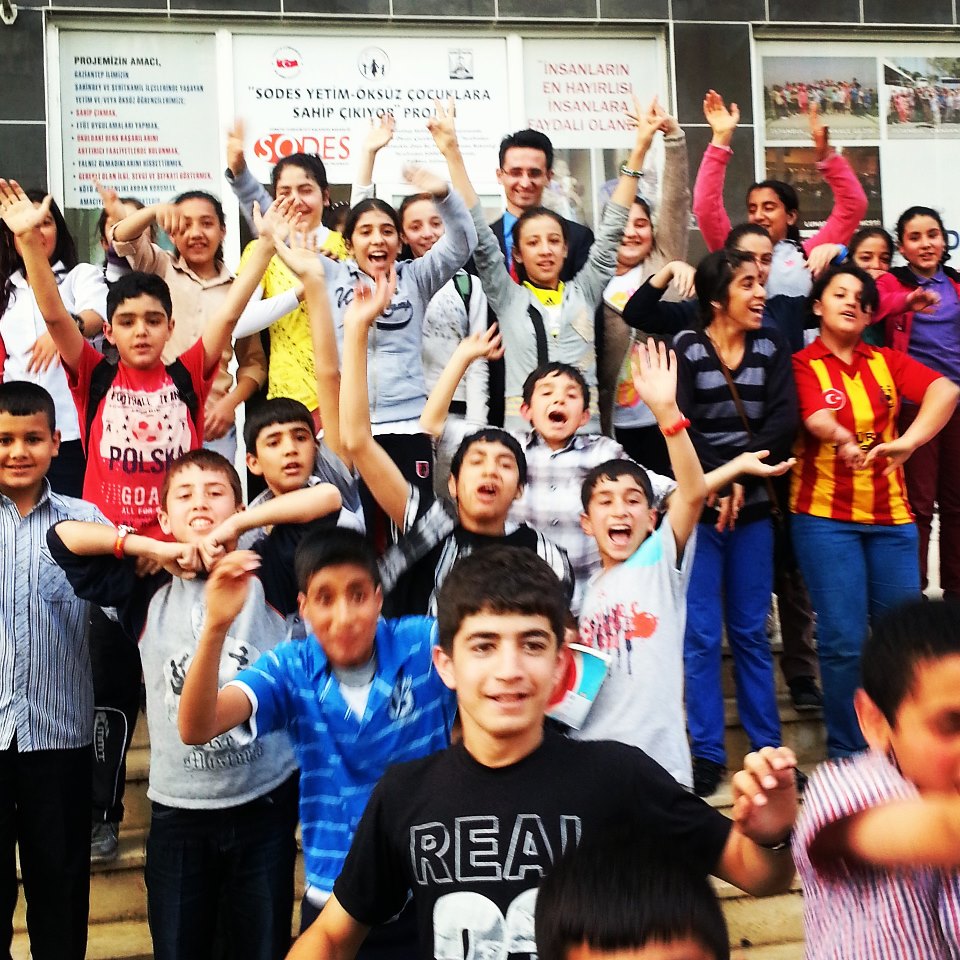
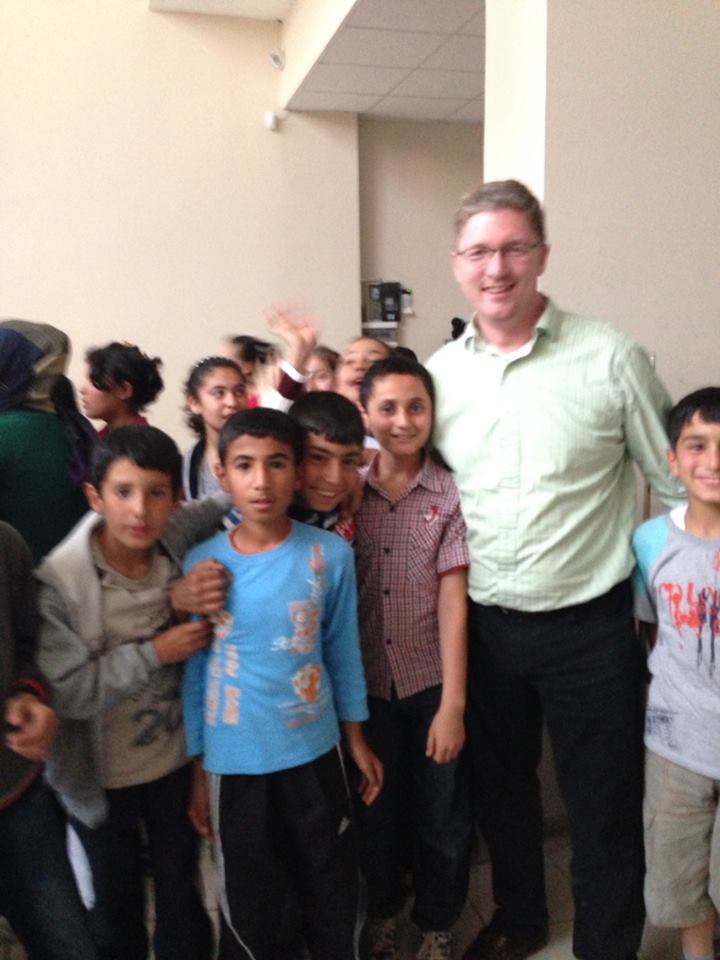
In Gaziantep, Turkey, the children at a local orphanage were recently asked to write about what they wished for most in life. The exercise was designed to help them think about their goals for the future. However, one child took the answer in a different direction: “I wish my parents could come back for just two hours, so I could show them around and have them meet my friends.”

This anecdote formed perhaps the most poignant moment in our recent visit to Turkey. As an orphanage sponsor told our group the story, our host and translator, Emre Celik, had to take a few moments before he passed the story along to us. There were few dry eyes in the room. Earlier, the children had greeted us with cheers, laughter and singing. But this story brought home the stark realities that these children face every day.

The facility we visited serves about 600 children between the ages of 10 and 18. Most of the children are Kurdish. Before coming to the orphanage, they were in danger of becoming street children, or being recruited by violent rebel groups such as the Kurdish Workers’ Party (PKK). Here, they can continue their education, make friends, and receive counseling. The site we visited is part of a network of orphanages taking care of about 10,000 children in Turkey who have lost one or both parents.


The counselors work hard to engage new children coming to the facility. They also watch for danger signs. The biggest concern among the staff is that a new children will emotionally withdraw into themselves. Developing a habit of withdrawal after an emotional trauma can have long term negative consequences. The staff and other children work hard to give the new kids a sense of care and belonging. This is as important to their health as any educational program the school has to offer. Caring, reciprocal relationships matter. Like a recent Harvard study (unsurprisingly) concluded:Happiness is love. Full Stop.

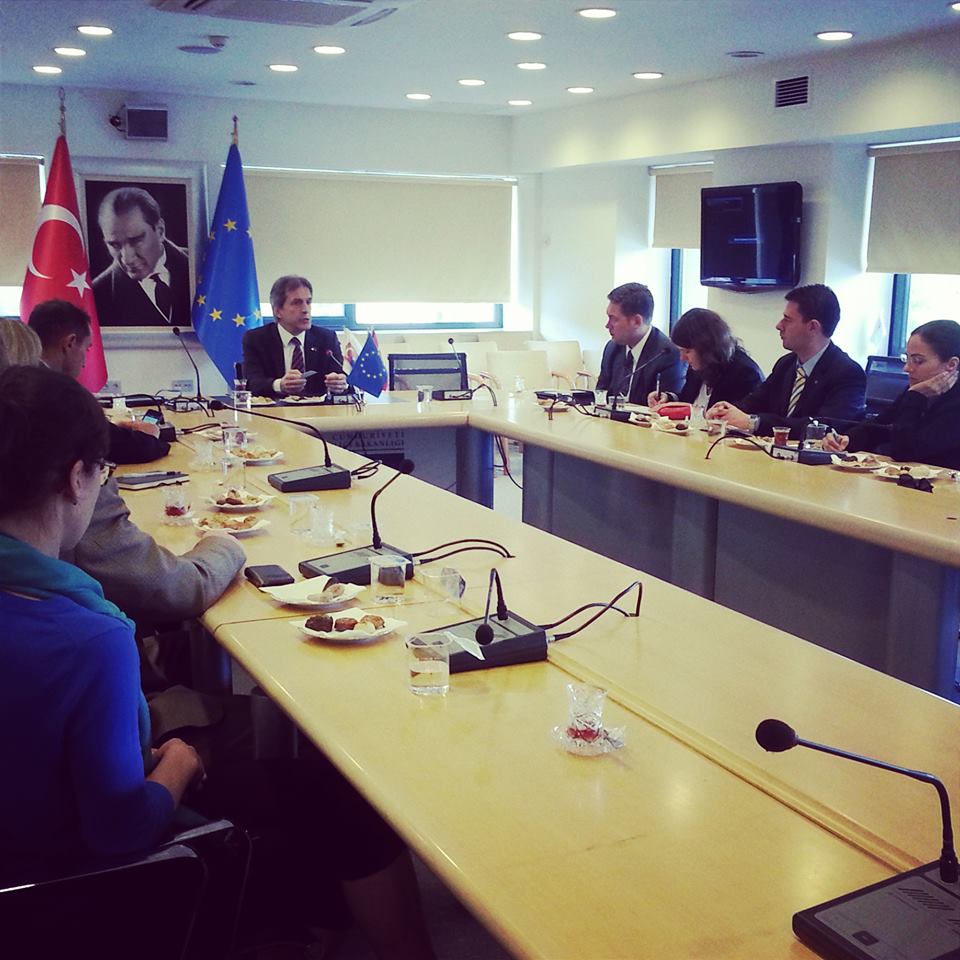
The orphanage visit was part of a week-long study fellowship for DC-area Ph.D. students. The trip gave us an inside look into many key segments of Turkish government and society. Our visits ranged from Turkey’s foreign affairs brokers in Ankara, to the country’s leading newspaper in Istanbul, to businesses, relief organizations and think tanks located around the country.

Many of the organizations we visited were part of what its popularly called the Gülen Movement. Its members refer to it as Hizmet, which simply means “the service.” It is perhaps the most powerful civil society group in Turkey. The founder, Fethullah Gülen, is a Muslim public intellectual and cleric who advocates what The Economist described as “pacifist, modern-minded Islam, often praised as a contrast to more extreme Salafism.”Hizmet members shun political office in favor civil society projects. They run large universities, hugely popular media outlets and influential non-governmental organizations. They remind me of Christian groups that have established universities, hospitals, NGOs and civil society organizations throughout the history of the United States. Faith is an important starting point for each member of the Hizmet. At the same time, Gülen advocates a secular government where religious practice is free from state control, and the government holds every religion at an equal distance. He promotes religious freedom for all faiths who wish to participate in the public sphere.


This places the Hizmet ideology far apart from some Islamist groups who wish for a theocratic state, as well as the Turkey’s historic Kemalist government position, which simultaneously controls religious institutions and removes them from public life. This includes the displacement of religious participation in education and other key sectors of civil society. Gülen promotes religious pluralism, freedom of conscience and fully engaged faith communities as critical components of a healthy society. Civil society is left vulnerable without support from citizens who actively look after its welfare. Just as caring relationships can change the life of an orphan, engagement by service-oriented religious groups can change a nation.

Yet, the trip was more about contemporary Turkey than it was about the Hizmet. Some meetings were disconnected from the movement’s activities, and some included critics of the movement. Each encounter helped us form a picture of Turkish civil life, including some universal concerns. From an editor at Zaman, Turkey’s largest daily newspaper, we learned how both sources and journalists face intimidation from the government, which severely hampers the role of the press in a free society. The morning after we met Zaman’s editors, I received word that the U.S. Justice Department seized AP’s phone records (likely including my own) from our DC, NY and Connecticut offices.

One of the biggest highlights of the trip was getting to know the other participants. It was a “fellowship” in the true sense of the word. We were all scholars with a different research interests studying at a variety of schools. Yet, there was a great deal of mutual respect running through the widely (and sometimes wildly) different personalities. We were able to discuss many points of view in our conversations with each other and the people we met along the journey. We also formed friendships that I hope will last into the years ahead.


* Walter Ratliff is a scholar of Religion and the Religions Editor at Associated Press

Tuesday, April 30, 2013

FOREIGN POLICY: Honorary President Fethullah Gulen on TOP500 list


Fethullah Gulen, Rumi Forum's Honorary President appeared on Foreign Policy's Global TOP500 list.


See also in FP: FOREIGN POLICY - Meet Fethullah Gülen, the World's Top Public Intellectual


The FP Power Map

The 500 most powerful people on the planet.

MAY/JUNE 2013


Is it possible to identify the 500 most powerful individuals on the planet -- one in 14 million? That's what we tried to do with the inaugural FP Power Map, our inventory of the people who control the commanding heights of the industries that run the world, from politics to high finance, media to energy, warfare to religion. Think of it as a list of all the most important other lists....


Thursday, April 18, 2013

FETHULLAH GULEN: A brief biography


FETHULLAH GULEN BIOGRAPHY


Fethullah Gulen , the Honorary President of the Rumi Forum, is an Islamic scholar, preacher and social advocate, whose decades-long commitment to interfaith tolerance and altruism has inspired millions in Turkey and around the world. Described as one of the world’s most important Muslim figures, Gulen has reinterpreted aspects of Islamic tradition to meet the needs of contemporary Muslims. He has dedicated his life to interfaith and intercultural dialogue, community service and providing access to education. He was the first influential Muslim public figure to publicly condemn the 9/11 attacks and express sympathy for the American people.


Gulen is the inspiration behind Hizmet, a transnational civil society initiative that began as a grassroots community in the 1970s. Hizmet advocates for the ideals of human rights, equal opportunity, democracy, non-violence and the emphatic acceptance of religious and cultural diversity. Efforts of Hizmet participants around the world center on: promoting philanthropy and community service, investing in education for cultivating virtuous individuals, and organizing intercultural and interfaith dialogue for peaceful coexistence.
The Rumi Forum is a member organization of Alliance for Shared Values. For more information about Gulen or Hizmet, please visit the Alliance for Shared Values at www.afsv.org.

Born into a humble family in Erzurum, Turkey in 1941, Gulen studied natural science, Eastern and Western philosophy, as well as Islamic tradition in his early years. He moved to Edirne in the late 1950s and to Izmir, Turkey’s third largest province, in 1960s, where he started to crystallize his views. His activism and discourse attracted the attention of learned citizens, including the academic community and college students, as well as common people. From mosques to conference halls, Gulen discussed issues ranging from religion, peace, education and science, to the economy and other pressing social issues of the time, especially social justice.

In the following two decades, Gulen’s efforts in reforming Turkey’s education institutions, which had long favored the wealthier students from urban centers, made him one of the best-known and respected figures in Turkey. By inspiring the establishment of scholarships, tutoring centers, schools and student hostels, Gulen gave disenfranchised rural students access to education, thereby transforming the social landscape of Turkey. 

In the last two decades, Hizmet has expanded education opportunities around the world — including Indonesia, Congo, Tajikistan, Kyrgyzstan, Cambodia, South Africa, Afghanistan and Pakistan — building schools, dormitories and tutoring centers, teaching college preparatory courses, mentoring students, and providing financial aid to those in need. Gulen has also advocated for the education of women and embraced equal rights, a progressive view that stands in contrast to the views of more literalist Islamic leaders.

Gulen’s focus on community service and education has inspired millions of Hizmet volunteers, who have established more than 1,000 schools, tutoring centers, colleges, hospitals and relief organizations in more than 100 countries around the world. These schools focus on science, math, literature and multicultural understanding, and many of their students have won major international math and science competitions. In conflict-ridden regions of the Philippines, Macedonia, Afghanistan, Iraq, and Bosnia, hundreds of Hizmet schools have become bastions of inter-religious and interethnic harmony, while relief organizations have been instrumental in bringing aid to disaster victims in Southeast Asia and Africa.

Gulen rejuvenated the Turkish tradition of interfaith dialogue and strongly advocates pro-democracy, equal opportunity, pro-science, non-violent stances. One of the core tenets of his teachings is the celebration of religious, cultural, social and political diversity. Gulen considers this diversity divine will; according to him, “you must have a seat for every person in your heart.”

Gulen’s lifelong work on interfaith cooperation has earned him recognition from Christian and Jewish leaders in his homeland Turkey and a personal audience with the late Pope John Paul II. He is also the recipient of New York-based East West Institute’s 2011 peace award. His efforts have also been praised by other global leaders who recognize his vital role in fostering understanding and peace as well as his leadership in humanitarian initiatives. In 2008, Gulen was ranked #1 in Foreign Policy and Prospect magazines’ joint poll of the “Top 100 Public Intellectuals.”

Gulen currently lives in relative solitude at a retreat facility in Pennsylvania, where he dedicates his time to reading, writing and personal worship, and to promoting shared values, dialogue and peace.  
The Rumi Forum is dedicated to peace building through interfaith dialogue and intercultural understanding working to increase social harmony and highlighting of service social justice issues.


More information about the Rumi Forum at www.rumiforum.org

Please also sign up for our events and newsletters here:


Sunday, May 20, 2012

Freedom award recipient Bartholomew praises Gulen's peace efforts

Greek Orthodox Ecumenical Patriarch Bartholomew poses to cameras with Dutch Queen Beatrix after receiving one of a Roosevelt Institute's Four Freedoms Award on May 12, 2012. (Photo: Cihan)

Speaking to Turkish media after the awards ceremony, Bartholomew said he thinks the award he received is a message of peace for Turkey and the world. “All of the recipients are working for peace and friendship. All of them contribute to peace: I as a man of religion and the other as a politician. The Indian lady is fighting poverty. I am honored to contribute to these beautiful efforts. I am thankful to the Roosevelt Institute,” he said.
The patriarch also said he attended a meeting of the Journalists and Writers' Association (GYV), of which Gülen is the honorary chairman, in İstanbul last week and stated that Gülen also contributes much to world peace. “We have been working with these friends [from the GYV] for long years. We are very close to each other as we share the same ideals: peace and unity. We appreciate their service for education. Fethullah Gülen Hocaefendi contributed and is still contributing a lot to interreligious dialogue. I met with him in Turkey and the US. We will continue to work together for world peace and our country's well-being. This is our common goal,” he said.
Stating that Gülen has been carrying out successful peace efforts, Bartholomew said he expects Gülen to return to Turkey soon. “We really love him. We hope he comes back soon,” he added.
Gülen is a Turkish Islamic scholar well known for his teachings promoting mutual understanding and tolerance between cultures. Now residing in the US, Gülen has pioneered educational activities in a number of countries, along with efforts to promote intercultural and interfaith activities around the world.
He has also written nearly 50 books in Turkish, some of which have been translated into several languages. He was most recently honored with the EastWest Institute's (EWI) 2011 EWI Peace Building Award for his contribution to world peace.

Friday, November 19, 2010

MEDIA - Ukrainian Newspaper 'The Day' features article on Fethullah Gulen

An interesting article has appeared in the Ukrainian paper 'The Day' that details the important role Fethullah Gulen (Honorary President, Rumi Forum) has played in bringing together communities and educating a new generation of socially responsible people. Some quotes from the article appear below.

Link to full article is at the end.


Are we to wait for our Fethullah Gulen?   /ДЕНЬ/


By Serhii LASHCHENKO

.....“Gulen is a spiritual personality,” states Shokalo with admiration. “His heartfulness and cordiality became the motive for the growth of his incredible ability to communicate! He became the pioneer of wide-ranging activity in the field of dialog with representatives of other religions in Turkish society, which has for long centuries been dominated by the Muslim population. Gulen’s meeting with the leader of Catholic world, Pope John Paul II, the Sephardic rabbi of Israel Eliyahu Bakshi-Doron, the Ecumenical Patriarch Bartholomew I of Constantinople, the Armenian Patriarch Karekin and leaders of other communities have found their response in society and prepared the foundations for close cooperation among the various groups. Due to this Gulen became a favorite and honored figure among the leaders and members of other religious communities.”


How we lack such a person, who would be able to unite… well, at least the Ukrainian Orthodox population. Or who would help to establish a constructive dialog between the intellectuals of our East and West. Whose voice would re-sonate to the quarrelling parties and scattered public organizations… Hasn’t the time come for the rich to listen to the pleadings of the poor? This can’t be done without negotiators. It is a pity that Ukraine doesn’t have a person of Mahatma Gandhi’s caliber. Turkey, a country which we snubbed for 30 years, has such a person. And this person is Fethullah Gulen — our contemporary. Incidentally, the Turks have never been set a task of liberation from the colonial oppression. Save perhaps the need of modernization, speeding up economic and spiritual development. The fact that a potentially powerful country has stepped out of shadows is partially to Gulen’s merit.

...Gulen’s schools are also highly prized in Russia. In particular, the academic Rybakov described his impression of [Gulen’s] pupils as follows: “Young, active, Europeanized to the highest extent — if one were to use this word in a positive meaning — broadly educated and wonderfully brought up. To be honest, I must say I first came across this new generation not even in Turkey, but in Central Asian nations, including the Kirghiz and Kazakhs, who were born in the Soviet Union, but started their lives in the Turkish schools that were opened there.”

...Thus, if there is a basis, we just have to learn from the Turks how to effectively create social networks, as they are the foundation of success. In any case, the Turkish example does give Ukrainians hope. Fethullah Gulen could have become a symbol for us. As he was the one who, according to Rybakov’s words, “without dramatic effects, slowly, quietly, as a gardener, changed the inner life of his country, transformed it beyond recognition, and, in the end, brought up a generation of free people.” Needless to say that Ukraine now requires renewal no less that Turkey once did...(READ FULL ARTICLE BELOW)


SEE OUR BLOG Suggested Links FOR OTHER ARTICLES IN THE MAIN STREAM MEDIA:
http://rumiforum.blogspot.com/2010/09/rumi-forum-suggested-links-has-been.html

FULL ARTICLE :
http://www.day.kiev.ua/317042

ORGINAL 'The Day' PAPER (in pdf format) - SEE PAGE 4:
http://www.day.kiev.ua/img/katalog/12/297479/258_3.pdf

Wednesday, October 6, 2010

John L. Esposito and Ihsan Yilmaz book on Fethullah Gulen and movement - amongst other books that are a must read to understand such a global civic and social movement involved in peace building and education

The Rumi Forum is part of a global civic movement motivated by the ideas of Fethullah Gulen. Though global in nature through various types of organizations - including schools, dialogue centers, media, health and welfare organization - little is know of the movement or the ideas of Fethullah Gulen. Some new books both by Gulen and about Gulen (and the movement) are mentioned below to acquaint you with Gulen's ideas.

Each of these book are a must to better understand the contributions of an important civic movement on the global scale...


NEWSEST BOOK by John Esposito:
Islam and Peacebuilding: Gulen Movement Initiatives
Amazon.com: Islam and Peacebuilding: Gulen Movement Initiatives (9781935295075): John L. Esposito, Ihsan Yilmaz: Books

The exploration of the contributions is made with regards to the title in hand by the thought and practice of the global movement associated with the Turkish Muslim scholar Fethullah Gulen. The importance and distinctiveness of teaching of Gulen and the practice of the movement is that it is rooted in a confident Turkish Islamic heritage while being fully engaged with modernity. It offers the possibility of a contextualised renewal of Islam for Muslims in the modern world while being fully rooted in the teachings of the Qu'ran and the Sunnah of the Prophet. It advocates the freedom of religion while making an Islamic contribution to the wider society based on a commitment to service of others.


Key Concepts in the Practice of Sufism Vol.4 (Emerald Hills of the Heart)
Amazon.com: Key Concepts in the Practice of Sufism Vol.4 (Emerald Hills of the Heart) (9781597842136): Fethullah Gulen: Books
Concluding a textually long but spiritually endless journey toward insan al-kamil?the perfect human?this fourth volume approaches Sufism through the middle way, an approach that revives the legacy of the Prophet Muhammad. With an awareness of the social realities of the 21st century, concepts such as tranquility, the truth of divinity, life beyond the physical realm, the preserved tablet, the glorified attributes, and the beautiful names are delicately explained. (3 previous volumes are also available)


The Gulen Movement: Civic Service without Borders
Amazon.com: The Gulen Movement: Civic Service without Borders (9781935295082): Muhammed Cetin: Books
This book seeks to develop an appropriate discourse for studying the Gulen Movement and phenomena like it. The established discourse concerns itself with social movements as protest, as challenge to the System, as contentious actors looking to alter or even overturn existing structures and/or policies in some field, usually political or economic. Approaching the matter from social movement theory and taking an insider's perspective, the author argues that the Gulen Movement is, as it has always been, non-contentious' it is not a marginalized actor working on the System from the outside. On the contrary, it has always worked within the System - within the boundaries of the laws and public norms that obtain in the different local and national settings where it has set up institutions.

Toward a Global Civilization of Love and Tolerance
Amazon.com: Toward a Global Civilization of Love and Tolerance (9781932099683): M. Fethullah Gülen: Books

This book has a double purpose. On the one hand, it is a call to Muslims to a greater awareness that Islam teaches the need for dialogue and that Muslims are called to be agents and witnesses to God's universal mercy. On the other hand, the book is an invitation to non-Muslims to move beyond prejudice, suspicion, and half-truths in order to arrive at an understanding what Islam is really about.

A Dialogue of Civilizations
Amazon.com: A Dialogue of Civilizations (9781597841108): Jill Carroll: Books
Writer Carroll states in the introduction that prior to a trip she made late in 2004 she was unaware that the organizers of the Institute for Interfaith Dialog based in Houston, Texas as well as the organizers of the trip itself were members of a community of people inspired by the notions of Fethullh Gulen, a Turkish Islamic scholar. Reading further we find Carroll's intent in this book is to 'place the ideas of Fethullh Gulen into the context of the larger humanities. Chapter titles are 1: Gulen and Kant on Inherent Human Value and Moral Dignity, 2: Gulen and Mill on Freedom, 3: Gulen, Confucius, and Plato on the Human Ideal, 4: Gulen, Confucius, and Plato on Education, 5: Gulen and Sartre on Responsibility. Kant's belief was that humans have inherent value, Gulen spoke of the transcendent value of human beings. Mills' assertions that the tyranny of the majority must be met head long was presented from his viewpoint of the nineteenth century Briton. Gulen avows that 'freedom allows people to do whatever they want, provided they do not harm others and they remain wholly devoted to the truth.' A Dialogue of Civilizations: Gulen's Islamic Ideals and Humanistic Discourse presents the query 'what is the level of resonance between Islam and the West?' That the twenty-first century has become an episode of heretofore unnoticed quandary is obvious. Up until 9-1-1 few worldwide really gave much thought to anything other than their own viewpoint. Writer Carroll finds significance can be gleaned an awareness of the theoretically divergent views of Gulen, Turkish Muslim scholar and those of Immanuel Kant, Confucius, Plato, John Stuart Mill, and Jean Paul Sartre regarding critical hypothesis including intrinsic ethical pride, creature significance, learning, autonomy, and accountability. The reader may be surprised to find out these figures who are separated by centuries in time, as well as oceans or continents have a propensity toward speaking the same language.

Writer Carroll's attentive writing style has produced a judicious and timely work, she is knowledgeable, presents her thesis in readable manner and holds reader interest. Not for everyone, if you are looking for a lighthearted, 'story' book for a quick afternoon read A Dialogue of Civilizations: Gulen's Islamic Ideals and Humanistic Discourse is not that book. If you would like to learn a little more about Gulen and his notions of education and dialog then A Dialogue of Civilizations: Gulen's Islamic Ideals and Humanistic Discourse will prove an eye-opening read.

Educational read, happy to recommend for those who are hoping to learn something of an interesting thesis. -- Midwest Book Review


More books on Fethullah Gulen:
Amazon.com: English - fethullah gulen: Books


Sunday, September 12, 2010

Ebru News | Gulen Calls For Peace At Eid Gathering

Rumi Forum's Honorary President Fethullah Gulen provided a message of peace during Eid-ul Fitr commemorating the festive season at the end of the fasting month of Ramadan on September 9, 2010. Ebru Tv covered the story. Please read below - a video is also available !

Ebru News | Gulen Calls For Peace At Eid Gathering

Fethullah Gulen giving his Eid message amongst friends on September 9, 2010


Prominent Turkish Islamic Scholar - Fethullah Gulen - lives far away from his native Turkiye... and so he spent the Eid with friends and he community in the United States//

Gulen met some friends at a modest breakfast after the prayer and later put smiles on some children's faces with his gifts.

His remarks at the breakfast focused on the need for people to come together. He said the holiday is an important foundation for building stronger and more peaceful communities.

But Gulen also noted that the eid celebration is not just about loved ones gathering together for a meal but also about true believers contemplating the joys and pleasures of the heavenly world.

He emphasized the importance of Muslims attaining a level of faith where each person's heart and hand are united in supporting each other.

He called on everyone to live their faith every day rather than dwelling on the superficial appearances.

Fethullah Gulen is known as one of the most important figures of today's Islamic world and one of the most significant advocates of dialogue for peace and understanding among different faiths.

His books and speeches inspired The Gulen Movement which contributes to world peace since the 1970's.
Ebru News


VIDEO AT BELOW LINK
http://news.ebru.tv/en/USA/16934.html