An important article about the reasons why
Gulen inspired schools have been successful the world over.
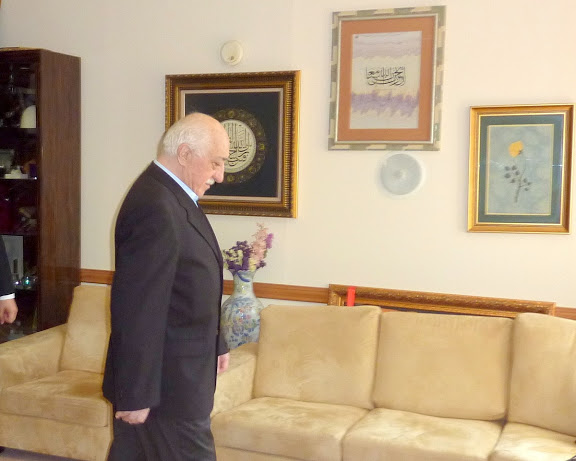
Fethullah Gulen is the Honorary President of the
Rumi Forum
The Key Factors behind the Success of Gülen-Inspired Schools
Ahmet Orhan Polat *
ABSTRACT
Fethullah Gülen is an innovative Islamic scholar and educator who encouraged education as the path to building a peaceful future. In light of
Gülen’s philosophy, the fruits of this educational investment are seen around the globe as these schools distinguish themselves in acquiring academic excellence and moral values in home and host countries. The
Gülen-inspired schools, both in their originating country Turkey and abroad, have attracted the attention of scholars due to their continuous academic accomplishments and emphasis on universal ethical values. The provision of quality educational service is evident not only in less developed countries, but also in advanced economies which have an internationally comparable advantage in supplying high standards of education.
This paper examines what success is in accordance with
Gülen’s educational philosophy; and investigates to what extent
Gülen-inspired schools have achieved the educational aspirations of
Fethullah Gülen, delving into quantitative and qualitative aspects of learning success. An analysis of academic achievements, significant accomplishments in the International Science Olympiads, student graduation and matriculation rates, and nurturing students who possess moral values that benefit the society will be studied to illuminate the subject. The second part of this paper probes the key factors behind the success of
Gülen-inspired schools around the globe, which have increased parental school choice for families by providing alternative education choices.
BACKGROUND
Fethullah Gülen is one of the most well-known Islamic Turkish contemporary scholars. He advocates a moderate Islam rooted in modern life, and his teachings and writings have motivated and inspired many Turkish people to dedicate their time and money to groups active in publishing, charity and educational activities around the world (Said 2006).
One of the main goals of
Gülen is to reach universal values and he believes these to be paramount to the human experience.
Gülen followers believe that education, love, mutual respect and philanthropy are the only approach to building peace and harmony among humankind. Thus, one of the important factors in minimising conflicts is respecting human kind for what they are. This can only be achieved through information, interaction and mutual understanding. Therefore,
Gülen firstly spread
his educational philosophy in Turkey and he wanted the followers to take this to other regions of the world. To
Gülen, a school’s language should be one of heartfelt love, compassion and teaching through example with special references to common human values and morals and accepting people for what they are. This unique vision of education was imperative as the Muslim world and humanity in general face ignorance, poverty and disunity resulting in conflicts, insecurity, moral decay and clashes around the world. To
Gülen, the only solution to combat ignorance is through education, and an end to poverty and disunity through
dialogue, mutual understanding and cooperation (Aymaz 2009).
He believes that ignorance is the public enemy, and in order to minimise this problem, he advised those around him to open schools and educational institutions founded on modern science and morality.
Gülen believed that the existing education system in Turkey did not offer the knowledge and values for the holistic development of each student. Hence, it was
Gülen’s dream to build private schools in which students were given the opportunity to equip themselves with modern science at the same time as they were also being infused with morals, ethics and love for humanity. Gradually, people started to comprehend the immensity of his vision and came with passion to encourage his vision.
SUCCESS IN ACCORDANCE TO
GÜLEN’S EDUCATIONAL PHILOSOPHY
The success of education is not only dependent on the academic accomplishments of a student, but must also include emphasis on the character of an individual student, as well as his/her moral and ethical values. Hence, differentiating education from teaching and cultivating students who possess scientific knowledge along with moral values are key factors that produce successful schools.
Gülen states that many people can be teachers, but only a limited number of people can be educators (Gulen 2004). This is because Gulen defines education as different from teaching. Although the educator and teacher can impart information and teach skills to students, educators have the ability to assist the personalities of students and build their character through the development of self-discipline.
Gulen states that those who simply teach for the purpose of gaining a salary have no interest in the character formation of students, and thus cannot assist their student’s educations. Therefore,
Gulen offers a new style of education which will fuse religious and scientific knowledge together with morality and
spirituality in order to generate enlightened individuals with hearts illumined by religious sciences and
spirituality. Minds illuminated with positive sciences called “The Golden Generation” (Michel 2002; Said 2006).
Spirituality in Gulen’s lexicon means ethics, tolerance, openness, acceptance of plurality, psychological health and logic.
Gülen’s educational vision would be accomplished through building a golden generation who are ideal universal individuals, citizens who love truth, who integrate
spirituality and knowledge, and who work for societal benefit (Michel 2003).
Gülen considers that human needs and the solving of human problems are educational activities. However, he was convinced of the need for a new kind of education in the formation of youth in Turkey. He felt that the existing education systems did not provide students with opportunities for holistic growth and personality development. Thus, he desired to build a new type of education system which would accommodate the following ideas: that the mind and soul are to embrace each other, that conscience and logic are to become complementary depths, that physics and metaphysics are to work together, that schools and homes are to be established to allow the flow of happiness, that purity is not to be damaged, that honesty is not to be abused, that the heart is to pump respect and esteem, and that individuals are to be in harmony with everyone regardless of ethnic, cultural or religious affiliations (Said 2006).
The educational perspective of
Gülen is the illumination of the mind to science and knowledge, and the lighting of the heart in faith and virtue. This can be accomplished though teachers who are committed to devoting their lives, time and knowledge to teach the younger generations in these educational institutions (Michel 2010). Thus, the inspired teachers pervade the inspiration of
Gülen’s educational philosophy as volunteer educators around the world; since teaching is a sacred activity and teachers help students to develop their capacity to bring about positive change. Teachers are responsible for teaching knowledge with the wisdom to use it. As a result of
Gülen’s teachings and his moral example, teachers are inspired to take action, to sacrifice and to serve human beings rather than themselves. Besides this, the teachers provide knowledge, wisdom and moral guidance through embodying
spirituality rather than preaching values.
According to
Gülen, through the new educational style, the students are to be given non-material values such as the profundity of ideas, clarity of thought, and depth of feeling. Thus,
Gülen’s educational vision aims to embrace societies throughout the world, and would be a solution for various societal problems (Michel 2005). Furthermore, Gülen describes this as a duty to serve humanity particularly in the field of education with no expectation of material or political gains.
Gülen’s education philosophy does not include utilitarian, social and political activity. Besides this, the teachers in the Gülen-inspired schools do not seek to maximise the advantages of the actor in political decisions, as Gülen emphasises that sincerity and purity of intention should never be harmed (Williams 2007).
Gülen states that a good school is not only a building where students learn theoretical information, but also an institution or a laboratory in which students are to be prepared for life by educators (Said 2006). Besides this, a school is a safe place where students are to be protected from bad habits and learn important concepts for this life and the next. Also, a school is to shed light on important notions and events, and help students to clearly understand their natural and human environment.
In the late 1960’s as people began to consider
educational philosophyand aspirations, Gülen initiated the forming of reading groups in his followers’ homes in the city of Izmir, Turkey. After building a presence throughout Turkey during the 1970’s and 1980’s,
Gülen and his followers developed their educational ideas and opened schools internationally, first in Central Asia and then in the 90’s in the Balkans, Western Europe and other parts of the world. There are currently more than 1000 Gülen-inspired schools in more than 110 countries around the world. In the European countries, there are at least a dozen Gülen-inspired schools, and more than 150 smaller educational and cultural centres. Generally, Gülen-inspired schools are low fee schools due to the limited wealth of supporters of these educational projects (Knowlton 2010). To President Obama’s Muslim Advisor Mogahed, the
Gülen Movement is a model and inspiration for all those working for the good of society, and is a highly admirable and impressive
movement in the world (Doha 2009). The main focus of the
movement is education, as Gülen emphasises the significance of educating younger generations with the idea of
peaceful coexistence and mutual understanding.
The educational institutions follow the national curriculum of the host country, as the schools are operating in many countries for their superior quality of education, with talented students and successful graduates. These schools focus on secular subjects in the classroom, and do not combine religious topics, but offer extracurricular programs for their students after or before school hours. Therefore, the schools abide by the regulations which are required by the government authorities in every country in which they have been founded. The teaching includes a modern curriculum integrated with extracurricular activities focusing on global social skills, ethical values, science and technology and support to achieve high goals (Keskin 2010; Knowlton 2010). The school’s disciplinary styles are based on the student oriented education system. The schools use the Western style with courses taught in English, Maths and Science, and new technologies in school classrooms which offer a good infrastructure for education. This approach attracts parents who wish to send their capable children to compete with the West without losing their identities. For example, a Professor in Pakistan withdrew his son from military school and sent his child to one of the Gulen-Inspired schools due to the modern teaching style and focus on moral values. For Gülen, if there is no science, religion can turn in radicalism and if there is no religion, science can become blind to education (Keles 2007; Times 2008).
Overall success in accordance to
Gülen’s educational philosophy is aimed at developing a nation’s youth into individuals who are in harmony with their own identity, and respectful of their own customs and religious beliefs. Who are tolerant towards the whole of humanity, and open to modern scientific notions, advanced technology, innovation and change.
QUANTITATIVE SUCCESS
The aim of the schools is to cultivate a generation of well-educated students, and the Gülen-inspired schools have proved themselves to be very efficient and successful educational institutions. The students of Gülen-inspired institutions have outstanding accomplishments in academic competitions across all subjects, though particularly in natural and information sciences, information technology and languages (Michel 2005; Nelson 2005). The academic accomplishments of the students in these schools have been praised, acknowledged and recognised by scholars, media and government authorities alike.
Achievements in the National and International Olympiads
Students of these educational initiatives have come first in national and international intellectual competitions and Olympiads. For example, one school achieved second place among some five thousand private schools in the nation in Kenya’s Certificate of Secondary Schools test, and ninth among all ten thousand private and public schools in Kenya (Kalyoncu 2008). Besides this, 15 students from Gülen-inspired schools in South Africa were among the top 200 students in the National Mathematics Olympiad in 2006. Also one of the six schools based in Johannesburg was awarded the title of the best science school in the country (Financial 2009). Furthermore, the Sebat International Education Institutions established in 1992 have achieved a high reputation for quality education through excellent results in national and international scientific competitions. During their existence they have won 216 national and 57 international competition medals. The Minister of Education in Kyrgyzstan stated that the success of Gülen-inspired schools has enabled Kyrgyzstan to open the world. Also, the graduates from these schools have continued their education in prestigious national and international universities in more than 24 countries around the world, including Turkey, the UK, USA and Europe (Keles 2007).
Moreover, the Gülen-inspired schools in Azerbaijan have participated in international Olympiads in the USA, UK, Italy, South Korea, Romania and Nigeria. They have won a total of 429 medals including 87 Gold, 138 Silver and 204 Bronze in 16 years of existence.[1] Likewise, six students from Isik College in Dandenong won High Distinction awards in the National Geographic Channel’s Australian Geography Competition in 2009, which attracted 90,000 entries from around Australia (Leader 2009). This success in Olympiads is also prevalent in the schools established in Russia, as two students obtained first and second place in the Russian Ecology Olympiad organised by Moscow State University in 2007. Tatar Turkish Girls School achieved 52 medallions ranging from gold to bronze in the national and international Olympiads across 10 years (Alimuhamedov 2007).
The success of Gulen-inspired schools is evident in the choice of schools parents make for their children. The schools confront high demand and yet limited space. For instance, in 2006, approximately 55000 students applied to schools in Kyrgyzstan, yet only 900 students had the opportunity to enter (Dogu 2010).
University Entrance Rates
The university entrance statistics of Gülen-inspired schools are very high across the world, particularly when comparing them to the local entry rates. More than 90 percent of the students enrolled at these schools in a major scale gain admission to university, which is relatively high when compared to the national level (Alimuhamedov 2007).
Gülen schools in Azerbaijan have witnessed unprecedented success, as 98 percent of its students enter university with their first preference. The graduates of these schools study in 50 universities in more than 40 countries around the globe. After their graduation and return back to their country, these young people become citizens who are better able to serve their nation. [2]
Similar success is achieved by Gülen-inspired schools in other corners of the world. In 2006 and 2007, Isik College, Eastmeadows campus in Melbourne was placed first, obtaining a 100 percent university entrance rate in Victoria, Australia. Similarly, the Upfield Boys campus boasts that 95 percent of its Victorian Certificate of Education (VCE) graduates had entered university. This made Isik College Upfield campus the third best school in the state of Victoria. In 2009, Isik College continued to be one of the top schools in Victoria despite being set up for socially and economically disadvantaged Turkish-Australian students. The principals and students have recognised that the school’s achievements are based on the close relationship between students and teachers. Students also address the teachers’ dedication to reach outstanding results in university exams (Polat 2010).
A parent whose daughter graduated from Sule College in NSW in 2006 has expressed his views about the success achieved by the school in the following way:
It is very pleasing to find out that Sule College, with its students from non-English backgrounds, in the Liverpool region, is first especially in English and within the top ten best high schools in the state. This school has given us a lot as a community and I am sure this school will give us more in the future with the support from the community.
On the other hand, the students of the Sule College in Sydney, NSW achieved outstanding results in the 2009 Higher School Certificate (HSC). Sule College dominated the state in HSC Mathematics, by placing itself first in the whole of New South Wales - topping the best schools. The students performed exceptionally well in many subjects. For example, in 2008, a female student was ranked 11th out of 33,000 students in the state for General Mathematics. However, in 2009, another female student achieved fourth position in the state for General Mathematics. Besides this, another female student achieved a remarkable result in placing herself first in the state for General Mathematics, and fourth in state for Business Studies. Thus, Sule College has received scores far above the state average like most Gülen-inspired schools in the world.[3]
Achievements in Sport
Isik College’s students are achieving awards in wresting activities in Victoria, even though wrestling in Australia is not high on the sports list. However, Isik College is successful in regards to wrestling in Melbourne, and the Isik College wrestling club brought home 11 medals including 3 gold from the 78th annual New Zealand National Wrestling Tournament (Leader 2005). In October 2010, Isik College’s wrestling club students have won two gold and two silver medals at a tournament for school age students in Queensland, Australia.
SUCCESS FROM A QUALITATIVE PERSPECTIVE
A high standard of education offered at Gülen-inspired schools is a key factor in parental choice. To Gülen, the schools are to promote respect for other cultures and views. Thus, students in Gulen-inspired schools gain an appreciation of other faiths and cultures as well as their own, in order to harmonise the global modern values with their local cultural traditions (Özdalga 2005).
The
educational philosophy of Gülen-inspired schools is to nurture a generation that will benefit humanity. The graduates of these schools who are studying at universities devote two to three days or evenings a week to helping students by tutoring them voluntarily. Apart from their academic assistance, these graduates organise various social activities where they motivate students and share their knowledge and experience about moral values and positive attitudes. Very similar activities are organised by senior students who mentor junior students during and after school hours. These students and young graduates sacrifice their time and prefer to assist others, even though it is not obligatory, while many of their peers spend most of their free time on leisure activities.
Moreover, the outcomes of indoctrinating universal, ethical, and moral values are evident from the school choices that parents make for their children. Students who do not meet academic requirements, such as achieving successful results in the entrance exams, or failing to achieve requirements in passing the year levels, are not allowed to continue their studies after a probationary period of one year. In these or similar cases, parents urge the school’s administrators to retain their child as the school imparts ethical and moral values and encourages the development of a positive attitude. In addition, it is important for parents to know that the students of these schools are not only extremely unlikely to have criminal records, but that its graduates do not have any addictions to drugs, alcohol or cigarettes. Consequently, even if a student does not meet the academic requirements, parents urge the school to accept their child to ensure he or she is in a safe environment.
THE KEY FACTORS BEHIND THE SUCCESS OF GÜLEN-INSPIRED SCHOOLS
The
educational philosophies of Fethullah Gülen, offering scientific knowledge and imparting universal ethical values have shown their results around the world and have appealed to parents, individuals, intellectuals and government authorities in various countries. The key factor behind the success of these schools is
Gülen’s educational philosophy which encouraged and motivated idealistic and unparalleled teachers to dedicate themselves to serve humanity. These teachers voluntarily dedicate their time, energy and knowledge to raising well equipped generations by setting examples, offering an individual approach, visiting families, organising extra lessons and tutoring afterschool, on weekends and holidays, and organising social and leisure camps and field trips while the schools’ administrators provide well equipped school environments and ensure a low teacher to student ratio to benefit the students and realise
Gülen’s philosophy. This has increased parental school choice for families by providing alternative educational choices.
The role of Teachers
One of the main factors behind the success of these schools is the role of committed and dedicated teachers at these schools. These teachers,Gülen are dedicating themselves to serve the students. They graduated from the most prestigious universities in Turkey and could get a reasonably good job in their country, yet they prefer to work at Gülen-inspired schools around the globe. The teachers’ unique approach to the education of their students has constructive impacts and has assisted them to be motivated towards their studies with positive influences on their attitudes. inspired by the
philosophy of thinker Fethullah Gulen.
Mahir Kara, one of the devoted teachers at Isik College in Melbourne, has been awarded the National Excellence in Teaching Award (NEITA). All the award recipients were nominated by parents and students. According to the NEITA’s Chairman, Terry O’Connell, the teachers have made a vital contribution to their communities through their teaching. They often spent their personal time in assisting their students and providing a welcoming environment. This award represents the community’s way of showing their heart-felt thanks and appreciation for the special and inspirational teachers who make a significant impact on their students, parents and communities (NEiTA 2009).
Kara, who is a mathematics teacher at Isik College was nominated by his Year 12 students as the most inspirational of teachers, and was selected and awarded by the organisation as one of twelve teachers in Victoria and one of sixty teachers in Australia.
According to the students, Mr Kara is an unsung hero. Two of his students described him as persistent, dedicated and committed:
I have never in my entire life met a man like Mr. Kara who is so dedicated to teaching. Mr. Kara does not teach because he is paid to, but because he loves teaching. He loves passing on his knowledge to students in his unique way of teaching. Although I never revealed my true feelings about him, I will not be shy to say that I love Mr. Kara. I love the way he looks at life, the way he can relate everything back to the subject. Through his dedication and passion for teaching, he has inspired me to become a teacher.
Also, Mr Kara can make the corrupt, ignorant, selfish and even lost find a meaning to life. Before I met Mr Kara, I would not have faith that a teacher could be so passionate about teaching and educating us with great enthusiasm. He made all efforts for us without any expectation. If any student had any problem, the first person who comes into our mind is Mr Kara as he spends his time solving our problems and he showed how to be true human beings by instilling in us universal values through his behaviour. While showing these values and dedication, he did not want to be mentioned since he always was a humble person. He truly loves his job, his students and his fellow teachers. Mr Kara is my unsung hero.
Teacher and student relationship
The success of Gülen-inspired schools is not only academic, but also unique in the style of interaction between students and teachers. The behaviour of the teachers has changed the students’ behaviour positively, as the teachers treat their students as their friend rather than mere children (Keles 2007; Kalyoncu 2008). However, there is a certain barrier between students and teacher in other schools. Thus, the students in Gülen-inspired schools follow in the footsteps of the teachers. This enables students to be more responsible and idealistic about serving their own countries. Gülen states that teachers are to be a model for students in imparting knowledge and moral values, rather than becoming a lecturer for students (Said 2006). This results in attracting more parents to Gülen-inspired schools.
The teachers in Gülen-inspired schools set examples for students entirely differently since they are moderate and flexible, comfortably coexisting with all people regardless of their class, ethnic, cultural or religious affiliation. Moreover, they do not have inappropriate habits such as smoking and drinking which are scary for parents or children. Thus, the students gain strong moral values by avoiding these habits and corruptions with the help of guidance and character education given at the schools. Although the schools prepare their students to enter into respectable universities, some parents send their children to the schools to safeguard their children from negative habits too. For example in Albania, the teachers come to Albania for their students, as opposed to making money. Furthermore, the students are supposed to become good citizens in their own countries because of what they have learned in school (Agai 2002; Keles 2007; Reuters 2008).
The teachers consider their task of educating not only as a job, but also a personal duty and responsibility. Put differently, teachers feel themselves responsible for their students’ development both academically and morally in Gülen-inspired schools. As motivated and inspired teachers, they encourage their students to work hard in their studies. Due to this, they expect students to depict the best academic progress in competitions. Furthermore, when students need any assistance they are ready to work extra hours and offer free tuition until everyone in class understands accurately. Thus, the students perceive that if their teachers work hard for their success and future, the students themselves should study hard as an obligation to thank their teachers for their efforts (Kalyoncu 2008; Keskin 2010).
Individual approach
The teachers’ aim is to develop an individual approach with each student. Gülen asserts that, “The best way to educate people is to show a special concern for every individual, not forgetting that each individual is a different ‘world’ ” (Unal and Williams 2000:313). Inspired by
his philosophy, teachers attempt to get familiar with their students very well, address their intellects as well as their hearts and feelings, to seek and to find special skills and hidden capabilities in every student. Each teacher acts as a professional psychologist to their characters, dealing with their issues, motivates students to study to their potential and provide a friendly environment to comfort their students. Teachers also insure that individual abilities are improved and attributes are transformed into positive behaviour (Tekalan 2005). In this case the aim should be to develop the individual personality, a sense of responsibility, tolerance,
dialogueand ethical values. This enables the school to bring up the ideal human character, and achieve perfection in the academic and social development of the students.
Family Visits and Parent-Teacher relationship
Fethullah Gülen emphasises the cooperation of the school and family in order to cultivate well educated and morally behaved generations. While the schools should be as perfect as possible as regards the curriculum, exemplary teachers with knowledge and values, and in the overall physical condition of the school, he stresses the necessary role of a family in the provision of a warm and quality environment at home (Unal and Williams 2000:310-11). Hence working closely with families is one of the main principles of Gülen-inspired schools around the world.
Visiting student’s families in their homes assist teachers to build trust, to learn about each student’s studying environment at home, to discuss and offer some recommendations to parents related to their child’s education. Throughout each academic year the teachers organise visits to their student’s houses to meet the parents and discuss the child’s academic and social progress in the home environment. In addition, this enables teachers to encourage parents to support their child’s education and discuss ways to assist each child individually based on his or her needs. Parents find these visits very fruitful in assisting the development of their child. A parent expressed:
When I heard that my son’s teachers wanted to visit my house I was really shocked but impressed because it was the first time my son’s teachers had come to my home to discuss his social and academic development as well as a timetable for study at home. Also, I felt that the school and the teachers give value to my son and to our family. The visit was a really great opportunity to get to know my son’s teachers and to understand the school’s system as well. Also I thought that the idea was really good to boost student’s motivations and to build a bridge between the school and the parent (Personal conversation 2009).
In addition to the home visits, the close relationship between parents and the teachers is improved through formal parent-teacher interviews conducted throughout the academic year. These regular meetings also enable the parents to discuss their child’s progress, and to be advised about strategies to help them to improve on their weaknesses. Teachers at Gülen-inspired schools believe that true success can be achieved when the school works in cooperation with student, family and the teaching staff.
Extra-Curricular and Social Activities
Gülen emphasises that “A school must be as perfect as possible”. Hence, teachers in Gülen-inspired schools strive to achieve academic perfection. One of the key factors that accelerate students understanding of concepts is an increase in their problem solving, analytical and practical skills in each subject area, which therefore leads to the outstanding results achieved by the schools. Also important are the extra weekend classes, intensive study camps, exam problem solving question sessions, and extra lessons after school. These extra tutoring classes are organised by the dedicated teachers who voluntarily teach and supervise the students. These preparations in the study camps and extra curriculum programs motivate students with a means to succeed. In junior and senior year levels, students are prepared for national and international science competitions by their subject teachers, and at the end of high school the students obtain remarkable results and enter prestigious universities in their own country or overseas (Keles 2007; Keskin 2010).
One of the graduates expressed as following:
The teachers in our school put in the extra hours. We had study camps organised, so that helped during the holidays to make sure we were always on top of our studies and up to date. The teachers at Sule College stayed with us and worked hard to do an exceptional job. The teachers have always been there throughout high school. They contribute to the overall success of the students, and I’m very thankful. [4]
Likewise, another high achiever from the same school said:
The school gave us all opportunities to succeed. My teachers, if it was not for them, I would not be able to achieve these marks. They were very helpful. If you did not understand a question the teacher would explain it, if you still did not understand it he would draw a diagram, and if you still did not understand it he would get up and demonstrate it. That is the lengths that my teachers went to make us understand and succeed. [5]
This drive for the success of students is clearly evident with teachers themselves. Unique stories of sacrifice, determination and commitment abound, with one particular story standing out.
There was a Saturday course weekend. I had to go to school to do extra-curricular activities with my students, yet I had a two-year old baby and I did not have a relative to take care of it. In the end, I had to leave my baby to my neighbour for three hours. I went to class to teach my subject to the students without any expectation. [6]
In
Gülen’s educational philosophy success is not only accomplishments in academic acceleration, but also improvement in behaviour. Extra-curricular and social activities such as picnics, fishing trips, excursions, field trips and other recreational programs provide time for teachers to build friendship with students outside of school time, and give them time to discuss good manners, respect, tolerance, understanding, love, helping others and being beneficial to society. Moreover these times allow teachers to personify these characteristics through their actions.
Teacher Professional Development Programs
For Gülen, to reach superior education in educational institutions, teachers are to be prepared excellently. Therefore, teachers are regularly trained by in-service training programs given by educational professionals during holiday times through workshops, observations, seminars and conferences (Said 2006; Woodhall 2006). When the teachers meet for training, school administrations also come together to exchange views and experiences and discuss good practice and innovations. These opportunities motivate teachers to keep themselves updated and active in the educational field and to return effective and quality lessons for students to understand the subject matter and elevate their achievements.
Dormitories and Mentor Programs
In the past, Gülen served as a teacher, supervised students and cared personally for the social, mental, intellectual and physical well-being of students in dormitories under his supervision. Thus, Gülen encouraged business owners to open dormitories where students remained and studied, guided by dedicated teachers. Many students stay at the dormitories in order to study regularly in the evenings under the guidance of their teachers and tutors, who are mainly graduates of the Gulen-inspired schools, to assist students with their homework after schools hours and on the weekend in dormitories. According to the Principal of Isik College in Melbourne mentor programs made for an important factor. This also gives students a role model, and helps students to believe in themselves and aspire to university.
Teacher-Student Ratio
The best determinant for student success is a 16 (or less) to 1 student to teacher ratio and the ability to deal with academic, social, behavioural and other issues. The teacher-student ratio in Gülen-inspired schools is low and another significant factor that contributes to the success of the schools.
For instance, there were around 510 teachers and 4616 students in Gülen-inspired schools in Kyrgyzstan in 2007. Therefore, the teacher-student ratio is approximately 1:9 (Keles 2007). Similar patterns are evident in the Gulen-inspired schools in Australia, where the ratio is 1:8 at Sule College and 1:9 at Isik College. A class with too many students is often disrupting to education, and in this way, student-teacher ratios are important to advancing students’ performance. Generally, Gülen-inspired schools include a ratio that is lower than other schools to motivate students and to discover each student’s features and abilities towards each subject. With these small number classes, the teachers have more opportunities to work together closely with every student in the class. Moreover, the educators in each classroom create an environment which is non-biased, and non-judgemental by their behaviour and non-materialistic values. Therefore the formula for success emerges with values and right thinking (Robinson 2008).
The Isik College Principal states that the small class sizes at school aim to provide ample opportunity to work in a one-to-one basis at an individual level in each classroom. Since the teachers need to have an opportunity to work with every student during class time. If the class size is big, the teacher would not concentrate on every single student. Thus the small size factor makes Gülen-inspired schools the ultimate educational and professional environment for student success (Leader 2009).
Schools’ Physical Conditions and Clubs
The school’s physical conditions and facilities directly affect the student’s motivation, and engage with their positive attitudes. Thus Gülen-inspired schools’ physical facilities ensure success for students with laboratories, playgrounds, indoor sports complexes, soccer and basketball fields, and computer labs (Kalyoncu 2008).
Clubs are another contributor to the success of Gülen-inspired schools. Each school has club activities to develop a student’s sociability, such as sports, maths, environment chess, drama, clubs and so on. The other aim of school clubs is to develop a student’s character positively since students learn cooperation, responsibility, and respect for one another, as well as the determination to succeed (Keles 2007). Zaman International School in Cambodia offers twenty seven different clubs for their students.
CONCLUSION
Gülen emphasises both academic and value matters as a “school must be as perfect as possible” through teaching modern sciences and by imparting universal ethical values. He believes that through a new style of education which merges modern knowledge with tradition, mind with heart, the world will able to combat the problems not only in political, economic or material aspects, but also in social, ethical and
spiritual realms. Gülen-inspired schools provide a unique case in this regard, by opening schools that emphasise sound education. The success of the schools inspired by
Gülen’s philosophy is renowned worldwide, and has been recognised and acknowledged by scholars, journalists, intellectuals and government authorities.
The key reasons behind the success of Gülen-inspired schools is the
unique and unprecedented educational philosophy of Fethullah Gulenwhich is followed by the unparalleled and devoted teachers who sacrifice their time and efforts to realise
Gülen’s philosophy, and hence strive for academic perfection while imparting moral values to the students. This paper has also investigated other factors that contribute to the success of the schools in offering a quality education to ethnically and religiously diverse students. It is believed that graduates of these schools are equipped with academic standards and moral values that will contribute positively to their society and to humanity in general.
Related articles
References
Agai, B. (2002). "Fethullah Gulen and his Movement's Islamic Ethic of Education." Critique: Critical Middle Eastern Studies 11(1): 27 - 47.
Alimuhamedov, F. (2007). "Peaceful Muslim–Non-Muslim Co-existence in a Secular Context " Retrieved 29 Sep, 2010, from
http://en.fgulen.com/conference-papers/peaceful-coexistence/2521-peaceful-muslimnon-muslim-co-existence-in-a-secular-context.html.
Aymaz, A. (2009). "The Gülen Movement: Past and Present." Retrieved 29 Sep, 2010, from
http://en.fgulen.com/conference-papers/gulen-conference-in-melbourne/3442-the-gulen-movement-past-and-present.html.
Dogu, E. (2010). 100 soruda Fethullah Gulen, Timas Yayinlari.
Doha, M. E. Y. (2009). Gülen movement an inspiration for all, says Obama’s Muslim advisor Mogahed Sunday's Zaman.
Financial, M. (2009). "Turkish Mission." Retrieved 19 Sep, 2010, from
http://www.fgulen.org/press-room/news/3467-turkish-mission.html.
Kalyoncu, M. (2008). "Gülen-inspired Schools in the East Africa: Secular Alternative in Kenya and Pragmatist Approach to Development in Uganda " Retrieved 19 Sep, 2010, from
http://www.fgulen.org/conference-papers/gulen-conference-in-washington-dc/3101-gulen-inspired-schools-in-the-east-africa.html.
Keles, I. (2007, 20 October 2009). "Contributions of the Gülen Schools in Kyrgyzstan." Retrieved 19 sep, 2010, from
http://www.fgulen.org/conference-papers/contributions-of-the-gulen-movement/2467-contributions-of-the-gulen-schools-in-kyrgyzstan.html.
Keskin, V. (2010). "Gulen Inspired Schools: Glocal Schools serving with Integrity and Sincerity " Retrieved 26 Sep, 2010, from
http://gulenschools.org/component/content/article/120-glocal-schools-serving-with-integrity-and-sincerity-.
Knowlton, B. (2010). Turk Who Leads a Movement Has Advocates and Critics. The Newyork Times.
Leader. (2005). "Police and College forge link " Retrieved Sep 29 2010, from
http://infoweb.newsbank.com.ezproxy.lib.monash.edu.au/iw-search/we/InfoWeb?p_topdoc=81&p_action=list.
Leader (2009). Students on top - of the world
Leader Newspaper. Dandenong-Springvale Dandenong (Melbourne, Australia) -.
Michel, S. J., Thomas (2005). "Sufism and Modernity in the Thought of Fethullah Gülen." The Muslim World 95(3): 341-358.
Michel, T. (2002). "Gulen as Educator and Religious Teacher." Retrieved 17-09 2010, from
http://www.fgulen.org/press-room/review/1054-gulen-as-educator-and-religious-teacher.html.
Michel, T. (2003). Fethullah Gülen as Educator. Turkish Islam and the Secular State: The Gülen Movement. H. Yavuz and J. Esposito. Syracuse, New York, Syracuse University Press: 69-84.
Michel, T. (2010). "Gulen's Pedagogy and the Challenges for Modern Educators " Retrieved 28 Sep, 2010, from
http://www.fethullah-gulen.org/academic-papers/gulen-pedagogy.html.
NEiTA. (2009). "Government Teachers Awarded Top Marks." Retrieved 25 sep 2010, from
http://www.neita.com.au/ftp/australia/media/2009/NEiTAMR2009ASGInspTeachStateAwdsFNL041109.pdf.
Nelson, C. (2005). "Fethullah Gülen: A Vision of Transcendent Education." Retrieved 26 Sep, 2010, from
http://en.fgulen.com/conference-papers/the-fethullah-gulen-movement-i/2133-fethullah-gulen-a-vision-of-transcendent-education.html.
Özdalga, E. (2005). "Redeemer or Outsider? The Gülen Community in the Civilizing Process1." The Muslim World 95(3): 429-446.
Polat, C. (2010). [Advancing in Education in an Advanced Democracy] Success and Recognition of Turkish schools in Australia. Today's Zaman.
Reuters. (2008). "Turkish Islamic Preacher - Threat or Benefactor? ." Retrieved 18 Sep, 2010, from
http://en.fgulen.com/press-room/169-news/2901-turkish-islamic-preacher-threat-or-benefactor.html.
Robinson, J., Phyllis. (2008). "Defining Ethos in Global Values Education." Retrieved 26 Sep, 2010, from
http://medya.zaman.com.tr/2008/11/17/robinson_phyllis.pdf.
Said, M. (2006). "Reading the World in
Fethullah Gülen's Educational Philosophy " Retrieved 19 sep, 2010, from
http://www.fethullahgulen.org/conference-papers/the-fethullah-gulen-movement-ii/2224-reading-the-world-in-fethullah-gulens-educational-philosophy.html.
Tekalan, S. A. (2005). "A MOVEMENT OF VOLUNTEERS ", from
http://www.fethullahgulenconference.org/houston/read.php?p=movement-of-volunteers.
Times, T. N. Y. (2008). "Turkish Schools Offer Pakistan a Gentler Vision of Islam ", 17 Sep 2010, from
http://www.fethullahgulen.org/press-room/news/2889-turkish-schools-offer-pakistan-a-gentler-vision-of-islam.html.
Williams, I., G. (2007). "The Vision of Education within Pluralistic Societies in the Thought of Gülen: The Contribution of Non-Denominational Education Towards Inter-Religious and Communal Understanding, Peace and Identity. A Study of Contrasts in the UK, Turkey and the USA." Retrieved 18 Sep 2010, from
http://www.fgulen.org/conference-papers/peaceful-coexistence/2506-the-vision-of-education-within-pluralistic-societies-in-the-thought-of-gulen-the-contribution-of-non-denominational-education-towards-inter-religious-and-communal-understanding-peace-and-identity-a-study-of-contrasts-in-the-uk-turkey-and-the-usa.html.
Woodhall, R. (2006). "
Fethullah Gülen’s Philosophy of Education in Practice." from
http://www.fethullahgulenforum.org/articles/5/fethullah-gulen-s-philosophy-education-practice.
Footnotes
[1] The information was obtained from the website of Cag Ogretim, Azerbaijan. Retrieved September 21, 2010.
[2] This information was obtained from ‘Yeseren Umitler’ documentary broadcasted by the Samanyolu in Turkey, special edition, Azerbaijan, part 5.
[3]This information was obtained from the website of SuleCollege. Retrieved September 27, 2010.
[4] Personal interview, December 18 2008.
[5] Personal interview, December 18 2008.
[6] Personal conversation, May 13 2008.
* : Ahmet Orhan Polat received his Master's degree from the University of Sydney and is currently a PhD candidate at the School of Political and Social Inquiry, Monash University in Melbourne. His study focuses on the
Gulen Movement. He was a teacher and administrator at the
Gulen Movement affiliated schools in Turkmenistan, Crimea and Australia between 1992 and 2008. Since 2009 Ahmet Polat has been serving as General Coordinator of the Australian Intercultural Society in Melbourne.
Paper presented at
International Fethullah Gulen Conference in Indonesia, 19 October 2010, Tuesday