Interview with German Newspaper Süddeutsche Zeitung ‘Charge of the Preacher’, dated 13th December 2014
Interviewers: Tim Neshitov and Christiane Schlötzer
Question: The Turkish government demands your extradition from Barack Obama. Do you still feel safe in the US?
The US is a democratic country with the rule of law. No one can be convicted arbitrarily and without due process here. There is no legal basis for the Turkish president’s extradition request. By doing so however, the only thing that is being is achieved is the violation of international law and the degradation of Turkey’s international standing and reputation.
Question: Once you supported of Recep Tayyip Erdogan’s conservative-Islamic AKP party. What has changed since then?
AKP was founded on the promise of democracy, human rights, EU-membership, an end to corruption and stigmatization of ‘others’, and economic development. In the first years they undertook steps in accordance with these promises and accordingly participants of the Hizmet movement supported them. However, after coming to power for the third time in 2011, the AKP government started to govern in ways that was completely contrary to the democratic steps they had taken in their first two terms.
For example, the political pressure on the media, the granting of super powers to the intelligence services (MIT), the use of Stasi-like methods, the disregard and contempt of judicial decisions, the mistreatment of protestors and many other such measures and steps all prove how far we have gone back on our democratic gains. To cover up their corruption and to form an authoritarian system, the government has declared me an enemy of the state. But there is a saying that fits well in this context and that is: ‘a liar’s candle only burns till sunset.’
Question: Together with Erdogan you have forced back the influence of the army on Turkish politics. Is this all forgotten?
In the past Turkey has experienced four different military coups. Governments have been brought down, ten thousands of people have been interrogated and arrested, and many of them got tortured. In Turkey terrible things have happened which are not imaginable in the EU (which we want to join). In a 2010 referendum 58% of the Turkish population voted for a change in the law. This constitutional change allowed bringing officers who had attempted a military coup to a civil court. If the AKP hadn’t politicized the referendum so much, maybe 70% would have approved it. For the first time in my life I made a recommendation on a matter of public vote (i.e. the referendum). I had said, ‘even the dead should rise and take part in this referendum’. After the country had been freed from the repression by the military, the AKP connected all state bodies to the executive and thus made institutions that supervise and keep illegal activities in check completely dysfunctional. As a result, the judiciary was no longer independent, creating a tutelage of a political party. Just as we took a stance against military tutelage in the past, we are against a political party’s tutelage today. That is why we have been labelled as traitors.
Question: Where is Turkey heading for?
During the recent period, the Turkish Republic gives the impression that it is no longer a social, laic, constitutional democracy. It has rather become a one-party state; even a one-man state. The separation of powers has been suppressed except for the constitutional court which is still putting up resistance. Today, Turkey is experiencing an internal polarization and is losing any international reputation it has. Turkey is getting lonelier. I am saddened by the current situation that my country finds itself in.
Question: Erdogan says that he wants to raise religious youth. Don’t you want the same thing?
The objective of the state cannot be to raise religious youth. Otherwise, the state would be imposing one worldview on its citizens. Freedom of religion and belief is a basic human right. It is the state’s responsibility to create an environment in which its citizen are able to freely practice and teach their faith and religion, whatever that might be.
What was expected of Erdogan, who has been in power for over 12 years, was to pass laws that protected and provided this freedom for religious minorities in Turkey as well. Whether this has been done or not is a matter of debate. What’s more, a religious person should not compromise upholding people’s rights and justice. In this sense I wish for a religious generation. But if you mean a generation which has no idea of its own religion that sows division and hatred in the society, then my answer is very clear: No.
Question: Recently you published statements in five major US newspapers taking a stand against Isis. How dangerous Isis?
In the history of Islam radical groups have come up. In fact, these groups suppressed other communities, murdered people and hereby betrayed their religion. A few years ago there was Al-Qaida. Now there is Isis; that’s all we needed! Isis defiles the image of Islam. What they are doing is nothing but barbarism. Whoever was prejudiced against Islam feels vindicated now. The situation is dire and scares our sleep away.
Unfortunately, the Islamic World has not taken an unequivocal stand on this matter including the Islamic scholars of Mecca, Medina, Egypt and Turkey.
Question: Did you expect more protests?
Sadly I haven’t seen any large demonstrations. Furthermore it is alleged that Isis is being supported from other countries with weaponry and logistics. If these claims are true, world peace and the future of Islam are in danger.
Question: Are Isis fighters Muslim?
They are victims of a mass psychosis. In Europe this phenomenon is well known. People followed movements, which were responsible for massacres. Isis members are ignorant people who don’t know their own religion in the least. They made up a ‘holy war’. It is a system of madness.
Question: How can young Europeans be protected from this madness?
Although this might appear to contradict the ideals of freedom in the Western world but we need to better control our youth. They should be better educated through seminars and conferences. The responsibilities of the countries that these young people come from should not be forgotten, too.
Question: What do you recommend to the politicians of the Turkish government on this subject?
I cannot recommend them anything. They will not listen to me. They have brilliant minds and know everything.
Question: How do you like Erdogan’s palace?
Every state needs prestigious buildings. However, instead of erecting a palace with 1000 rooms, they could have renewed the existing buildings. There was a court order to even freeze all work on the new constructon. The Prime Minister ignored it. Such behaviour shakes the citizens’ respect for the rule of law. In the Ottoman Empire the most splendid palaces were built during the time of their decadence and decline. Today many heads of states work in modest buildings. That’s why this magnificent building has in fact harmed Turkey’s reputation. 60% of the Turkish people regard it as wasteful. From a religious perspective this is “haram” (sinful and forbidden).
Question: Erdogan accuses your movement of infiltrating the judiciary and the police.
A citizen cannot infiltrate the institutions of his own country, he serves them. Anybody who has the necessary qualifications can be a public employee. I wonder whether what is disturbing these people is that such employees or civil servants have not sworn allegiance to their particular party. The current political practice does not only stigmatize Hizmet sympathisers, but anyone who keeps themselves at arms length from the governing party. They see everyone within this spectrum as harmful elements in the state. This is called a witch-hunt.
Question: Thousands of civil servants have been moved and dismissed. How many of them were Hizmet members?
I don’t even know a tenth of the people who feel connected to this movement. After a certain time it will be recognized that many of the concerned prosecutors, police officers and teachers that have been dismissed have nothing to do wit the Hizmet movement. It is possible that they are doing all these things with two things in mind. On the one hand, they try to present us as a big threat by stigmatizing so many people. On the other hand, they want to get rid of everybody who keeps him or herself at arms length from the AKP. Most recently a leading member of AKP has also admitted to this strategy as well.
Question: The officials had collected corruption allegations against sons of ministers and pro-government businessmen. What do you think about these allegations?
No one has been able to get to the bottom of the matter now that the judicial investigations have been derailed. Had this happened in a western democracy, the government would have resigned. Ankara went so far to portray the investigations as an international conspiracy – again, a typical strategy in authoritarian regimes.
Question: Has the Hizmet Movement been weakened?
Indeed, it cannot be denied that the propaganda by the state-controlled media has tarnished the image of Hizmet. People who send their children to our schools and support us with donations are being scared. But some day these lies and propaganda will eventually turn against those that manufacture them.
Question: The government plans to close down all your schools in Turkey.
These schools have won high praise and many awards. If Turkey is a state of law, we expect that nothing will happen to these schools. Otherwise, Turkey will lose.
Question: Recently Gülen Schools have been closed down in Central Asia. Is the Turkish government’s influence responsible for that?
The Turkish government tries to find different arguments against us in every country. In the republics of the former Soviet Union they say we are American spies. In the US they call us religious fundamentalists and in Islamic countries they allege that we are luring their children away from religion. They are pragmatists. Yet, in this way Turkey is breaking down bridges of friendship and is harming its international standing. In this way, Turkish paranoia is being transported abroad.
Question: A former US ambassador once described you as second most powerful man in Turkey. How do you see yourself?
I seek refuge from God of such entitlements. Anyone who knows me a little can confirm that I do not want to be known or famous. I have never tried to obtain spiritual or material gain by being known. My life of 76 years attests to this. If there is any success worth applauding in this movement that should be directed towards the many voluntary participants of it.
Question: Will this movement exist after Fethullah Gülen?
People who do not necessarily share my worldview have supported this movement. Our view has always been universal values. People in Africa whom I have never met co-financed the schools and hospitals there. These were people from whom we were not expecting anything. Every night when I go to bed I doubt whether I might wake up again. But I do not have the least amount of doubt about the future of the movement.
Question: Do you think about returning to Turkey?
I miss my country very much. I am an emotional person. I have got family and friends. Recently my brother passed away and I wasn’t able to attend his funeral. This was also the case with other relatives. I have spent 60 years of my life in Turkey. I feel very connected to places and even to objects; the village I was born in, the graves of my father and my grandparents, the neighbourhood in Izmir where I lived for many years, the books in my library there… All of these are always in my mind and I can’t hold back my tears when I recall them. If I returned to Turkey today, some people working at the highest levels of the state would abuse this for their ill intentions.
Question: Can you imagine reconciliation with Erdogan?
We didn’t start a fight. That’s why they have to make the first move for reconciliation. If some day Erdogan confesses to everyone that everything he said at his rallies and meetings against the movement were nothing more than lies and slander, then I will be I will be content with such efforts. [In a later comment, Gulen says “provided that they are allow for an independent judicial process to take its course and adjudicate on the corruption allegations”.]
Question: Is there anything which makes you happy nowadays despite all difficulties?
I have never been happy for a long time. After each military coup I was persecuted. But what I experience today is even worse. Still, on the bright side ‘coals and diamonds are now separated’ (Turkish saying). The world is now recognizing the meaning of this movement.
Question: Many in America were amused about Erdogan’s recent statement that Muslims had discovered America before Christopher Columbus. What are your comments on this?
It is up to researchers and scientists to discuss when something is first discovered. There are people who say: “Who is Einstein anyway? And who is this Edison?” They argue that Muslims knew all about this in the 5th century. It is not right to say ’only Muslims could have done’ a certain thing.
Rumi Forum's blog on Hizmet, Fethullah Gulen, peacebuilding, education and interfaith efforts.
Showing posts with label istanbul. Show all posts
Friday, January 9, 2015
Tuesday, November 26, 2013
Rumi Forum organizes trips during August and September 2013
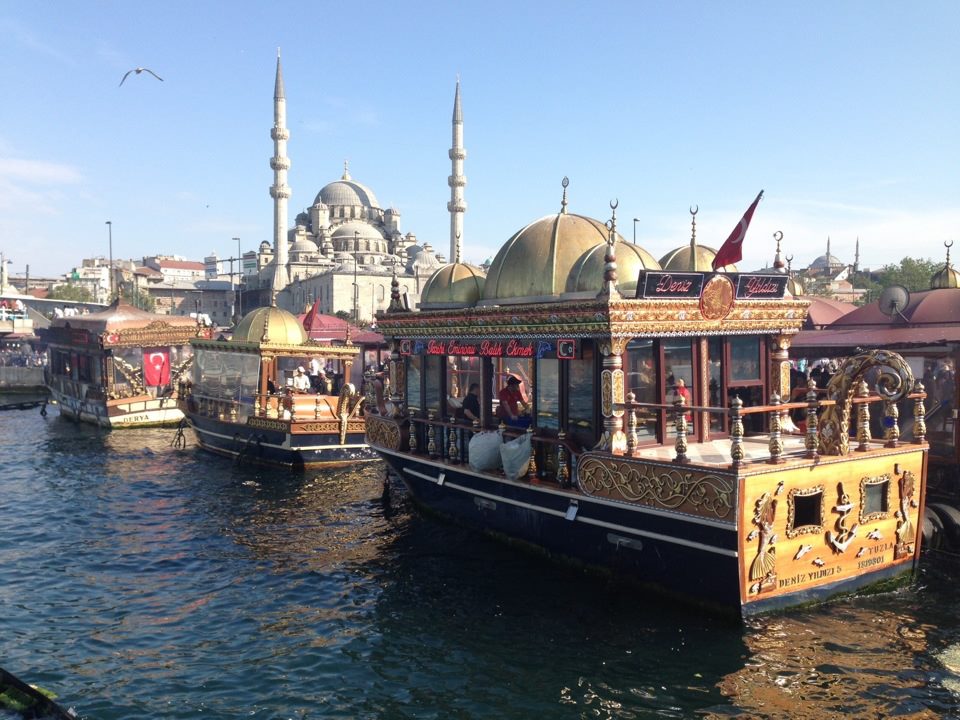
Rumi Forum brings together various sectors in the wider Washington DC area in small groups to travel to Turkey. Cities such as Istanbul, Ankara, Gaziantep and Izmir (amongst others) are visited. During August and September 2013 Rumi Forum organized 3 trips. Thinktank and university scholars, Government departments, Members of Parliament, NGOs, journalists and numerous others were visited.
Sunday, June 2, 2013
ARTICLE: An Eye-Opening Trek Into Turkish Society
An Eye-Opening Trek Into Turkish Society
WALTER RATLIFF*
May 22, 2013


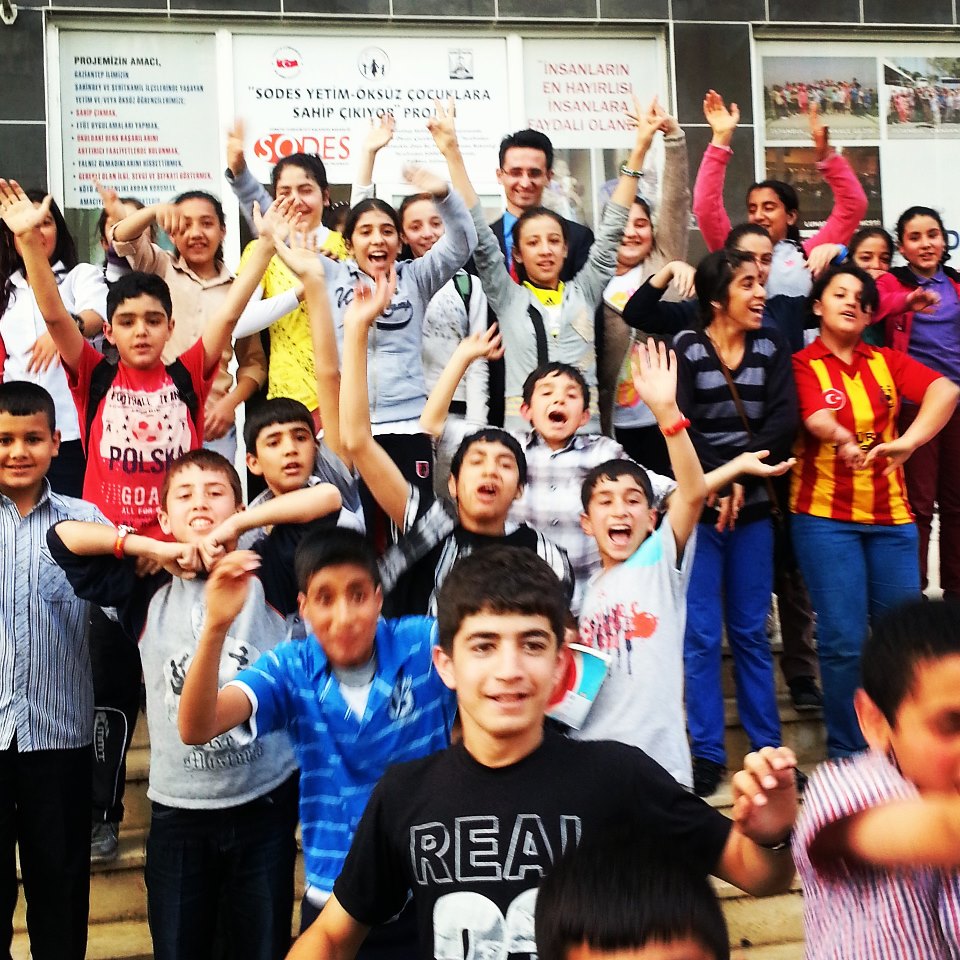
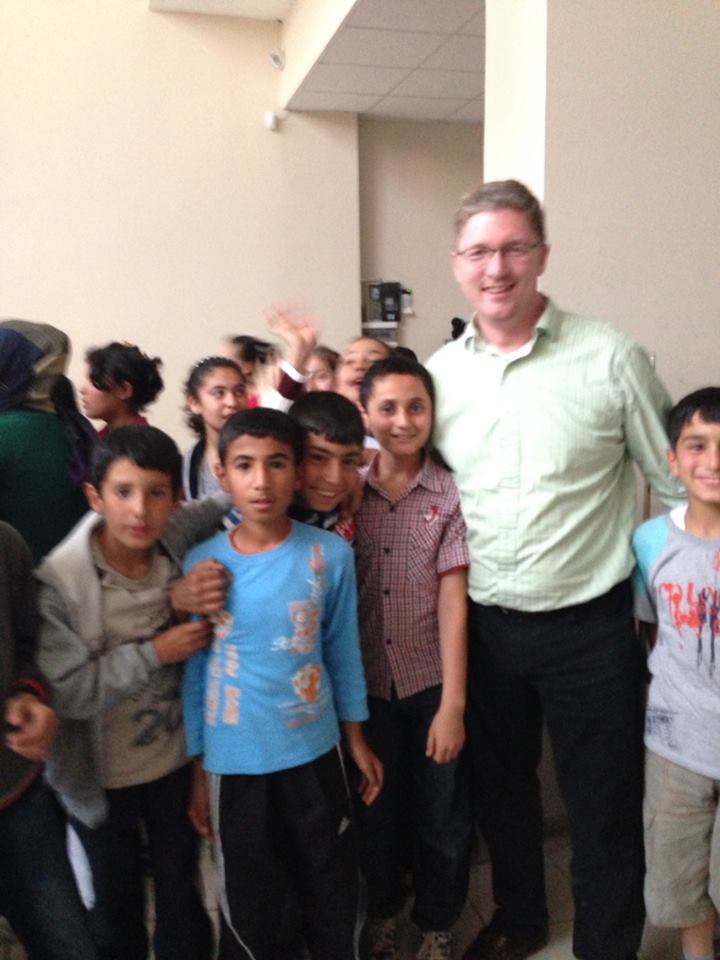
In Gaziantep, Turkey, the children at a local orphanage were recently asked to write about what they wished for most in life. The exercise was designed to help them think about their goals for the future. However, one child took the answer in a different direction: “I wish my parents could come back for just two hours, so I could show them around and have them meet my friends.”
This anecdote formed perhaps the most poignant moment in our recent visit to Turkey. As an orphanage sponsor told our group the story, our host and translator, Emre Celik, had to take a few moments before he passed the story along to us. There were few dry eyes in the room. Earlier, the children had greeted us with cheers, laughter and singing. But this story brought home the stark realities that these children face every day.
The facility we visited serves about 600 children between the ages of 10 and 18. Most of the children are Kurdish. Before coming to the orphanage, they were in danger of becoming street children, or being recruited by violent rebel groups such as the Kurdish Workers’ Party (PKK). Here, they can continue their education, make friends, and receive counseling. The site we visited is part of a network of orphanages taking care of about 10,000 children in Turkey who have lost one or both parents.

This anecdote formed perhaps the most poignant moment in our recent visit to Turkey. As an orphanage sponsor told our group the story, our host and translator, Emre Celik, had to take a few moments before he passed the story along to us. There were few dry eyes in the room. Earlier, the children had greeted us with cheers, laughter and singing. But this story brought home the stark realities that these children face every day.
The facility we visited serves about 600 children between the ages of 10 and 18. Most of the children are Kurdish. Before coming to the orphanage, they were in danger of becoming street children, or being recruited by violent rebel groups such as the Kurdish Workers’ Party (PKK). Here, they can continue their education, make friends, and receive counseling. The site we visited is part of a network of orphanages taking care of about 10,000 children in Turkey who have lost one or both parents.

The counselors work hard to engage new children coming to the facility. They also watch for danger signs. The biggest concern among the staff is that a new children will emotionally withdraw into themselves. Developing a habit of withdrawal after an emotional trauma can have long term negative consequences. The staff and other children work hard to give the new kids a sense of care and belonging. This is as important to their health as any educational program the school has to offer. Caring, reciprocal relationships matter. Like a recent Harvard study (unsurprisingly) concluded:Happiness is love. Full Stop.
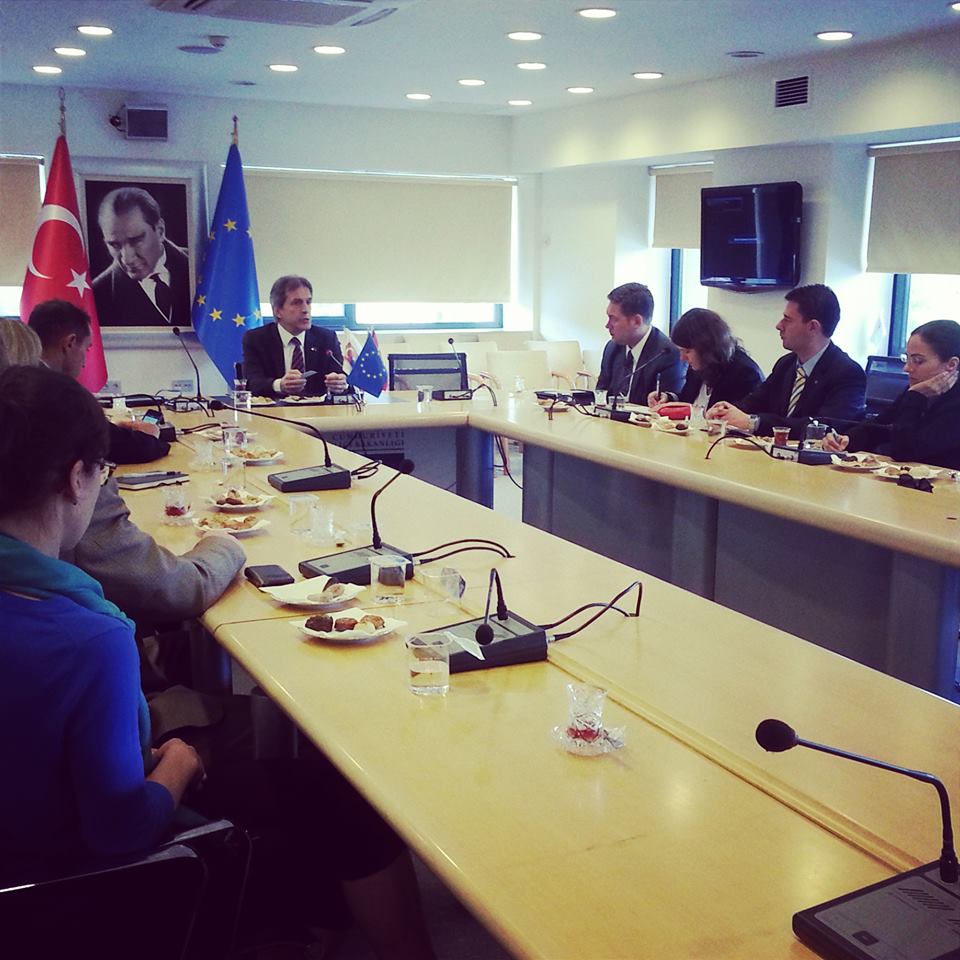
The orphanage visit was part of a week-long study fellowship for DC-area Ph.D. students. The trip gave us an inside look into many key segments of Turkish government and society. Our visits ranged from Turkey’s foreign affairs brokers in Ankara, to the country’s leading newspaper in Istanbul, to businesses, relief organizations and think tanks located around the country.
Many of the organizations we visited were part of what its popularly called the Gülen Movement. Its members refer to it as Hizmet, which simply means “the service.” It is perhaps the most powerful civil society group in Turkey. The founder, Fethullah Gülen, is a Muslim public intellectual and cleric who advocates what The Economist described as “pacifist, modern-minded Islam, often praised as a contrast to more extreme Salafism.”Hizmet members shun political office in favor civil society projects. They run large universities, hugely popular media outlets and influential non-governmental organizations. They remind me of Christian groups that have established universities, hospitals, NGOs and civil society organizations throughout the history of the United States. Faith is an important starting point for each member of the Hizmet. At the same time, Gülen advocates a secular government where religious practice is free from state control, and the government holds every religion at an equal distance. He promotes religious freedom for all faiths who wish to participate in the public sphere.

The orphanage visit was part of a week-long study fellowship for DC-area Ph.D. students. The trip gave us an inside look into many key segments of Turkish government and society. Our visits ranged from Turkey’s foreign affairs brokers in Ankara, to the country’s leading newspaper in Istanbul, to businesses, relief organizations and think tanks located around the country.
Many of the organizations we visited were part of what its popularly called the Gülen Movement. Its members refer to it as Hizmet, which simply means “the service.” It is perhaps the most powerful civil society group in Turkey. The founder, Fethullah Gülen, is a Muslim public intellectual and cleric who advocates what The Economist described as “pacifist, modern-minded Islam, often praised as a contrast to more extreme Salafism.”Hizmet members shun political office in favor civil society projects. They run large universities, hugely popular media outlets and influential non-governmental organizations. They remind me of Christian groups that have established universities, hospitals, NGOs and civil society organizations throughout the history of the United States. Faith is an important starting point for each member of the Hizmet. At the same time, Gülen advocates a secular government where religious practice is free from state control, and the government holds every religion at an equal distance. He promotes religious freedom for all faiths who wish to participate in the public sphere.

This places the Hizmet ideology far apart from some Islamist groups who wish for a theocratic state, as well as the Turkey’s historic Kemalist government position, which simultaneously controls religious institutions and removes them from public life. This includes the displacement of religious participation in education and other key sectors of civil society. Gülen promotes religious pluralism, freedom of conscience and fully engaged faith communities as critical components of a healthy society. Civil society is left vulnerable without support from citizens who actively look after its welfare. Just as caring relationships can change the life of an orphan, engagement by service-oriented religious groups can change a nation.
Yet, the trip was more about contemporary Turkey than it was about the Hizmet. Some meetings were disconnected from the movement’s activities, and some included critics of the movement. Each encounter helped us form a picture of Turkish civil life, including some universal concerns. From an editor at Zaman, Turkey’s largest daily newspaper, we learned how both sources and journalists face intimidation from the government, which severely hampers the role of the press in a free society. The morning after we met Zaman’s editors, I received word that the U.S. Justice Department seized AP’s phone records (likely including my own) from our DC, NY and Connecticut offices.
One of the biggest highlights of the trip was getting to know the other participants. It was a “fellowship” in the true sense of the word. We were all scholars with a different research interests studying at a variety of schools. Yet, there was a great deal of mutual respect running through the widely (and sometimes wildly) different personalities. We were able to discuss many points of view in our conversations with each other and the people we met along the journey. We also formed friendships that I hope will last into the years ahead.
Yet, the trip was more about contemporary Turkey than it was about the Hizmet. Some meetings were disconnected from the movement’s activities, and some included critics of the movement. Each encounter helped us form a picture of Turkish civil life, including some universal concerns. From an editor at Zaman, Turkey’s largest daily newspaper, we learned how both sources and journalists face intimidation from the government, which severely hampers the role of the press in a free society. The morning after we met Zaman’s editors, I received word that the U.S. Justice Department seized AP’s phone records (likely including my own) from our DC, NY and Connecticut offices.
One of the biggest highlights of the trip was getting to know the other participants. It was a “fellowship” in the true sense of the word. We were all scholars with a different research interests studying at a variety of schools. Yet, there was a great deal of mutual respect running through the widely (and sometimes wildly) different personalities. We were able to discuss many points of view in our conversations with each other and the people we met along the journey. We also formed friendships that I hope will last into the years ahead.
* Walter Ratliff is a scholar of Religion and the Religions Editor at Associated Press
Saturday, April 20, 2013
Fethullah Gülen: How to get an interview
Justin Vela writes:
Gülen, in particular, is fascinating to me. And, yes, the fascination comes from more than being chastised by one of the Gülen Movement’s newspaper as an “emotional” and “biased” reporter. A weeks ago, I pressed a senior member of the movement on how I could interview Gülen. The man laughed. If you want to interview Gülen you should read everything that he has said and everything that has already been written about him, the man said. Then submit a list of original questions that have not already been answered.
It sounds so simple. And I am working on it. However, Gülen has said a lot and there’s been a lot written about him. So I could use some help. If you have an original question you’d like me to ask Gülen in the near future do let me know. Of course, it will be nice to have his thoughts on being chosen one of TIME’s 100 most influential people for 2013. But there’s a lot more to ask a man whose teachings have created an international movement.
SOURCE: http://justinvela.wordpress.com/2013/04/18/how-to-interview-fethullah-gulen/
Thursday, April 18, 2013
ANNOUNCEMENT Fethullah Gulen, Rumi Forum Honorary President, named in 2013 TIME 100 list

We were delighted to hear today that Mr. Fethullah Gulen, an inspiration for many of our volunteers and donors, was named as one of TIME Magazine’s 100 most influential people in the world in 2013.
Being named on the TIME100 list is recognition we see befitting of Mr. Gulen, who has dedicated his life to interfaith tolerance and peaceful coexistence with people of all faiths and backgrounds. His reinterpretation of aspects of Islamic tradition not only meets the needs of contemporary Muslims, but also inspires millions in Turkey and around the world to promote community service, intercultural dialogue and education.
The 2013 TIME 100 includes other noted world leaders such as President Obama and Pope Francis . In the past, TIME has honored global leaders such as the Dalai Lama, Pope Benedict XVI and Aung San Suu Kyi in their TIME 100 list. Last year, TIME’s honorees in education were Salman Khan and Cami Anderson.
TIME recognized Gulen for “preaching a message of tolerance that has won him admirers around the world.” As you may know, Hizmet volunteers over the years have been involved in building schools, dormitories and tutoring centers, teaching college preparatory courses, mentoring students, and providing financial aid to those in need. With a focus on science, math, literature and multicultural understanding, its award-winning schools have been established around the world, including Indonesia, Congo, Tajikistan, Kyrgyzstan, Cambodia, South Africa, Afghanistan and Pakistan.
To read more about Mr. Gulen’s and Hizmet’s efforts in education, please visit the Alliance for Shared Values at www.afsv.org. The Rumi Forum is a member organization of AFSV.
To read more about Rumi Forum, please visit www.rumiforum.org
You can also follow us on
Facebook: http://bit.ly/rfFACEBOOK
Twitter: http://twitter.com/rumiforum
Thank you all for your continued support and service to Rumi Forum
Best,
Emre Celik
President
Rumi Forum
Friday, April 12, 2013
EURASIANET: Turkey: How Durable is Gulen Movement?
Turkish spiritual leader Fethullah Gülen, 72, has long been rumored to be in a precarious state of health. But well-informed followers offer assurances that the international network of schools, businesses, media-outlets, and civil-society organizations that his movement has built is prepared for a stable transition.
Gülen, who is widely acknowledged as one of the most influential Turkish theologians of his generation, has lived a quiet existence on a rural estate in the US state of Pennsylvania for the past 14 years. He is known to have diabetes, problems with the nerves in his knees and a weak immune system. "Any small sickness could have a big influence on him," said Mustafa Yeşil, the head of the Istanbul-based Journalists and Writers Foundation, one of the movement's most prominent organizations.
Yeşil, who meets with Gülen in the United States about once a month, said the movement's founder rarely goes outside. "Even this change of weather could be risky for him."
However, Yeşil insisted that neither Gülen's current condition nor his death would have a major impact on the movement he has assembled, a network that now extends far beyond Turkey’s borders. "His passing away would definitely have a negative influence in terms of motivation,” Yeşil said. “But the projects would still be carried out, and administration-wise, it would not be affected by his death."
While there is no designated successor, Yeşil said that there are individuals within the movement's organizations who have internalized Gülen's teachings and who are capable of providing guidance following his death. He cited two organizations -- the Istanbul-based TUSKON trade organization and the Journalists and Writers Foundation -- as potential sources of leadership.
Fevzi Bilgin, the head of the Rethink Institute in Washington, DC, another Gülen-linked organization, said the movement was mature enough to survive without Gülen. "We wish hocaefendi a long life," Bilgin said, using an honorific title for Gülen. "We want him to be around. We get constant inspiration from him. At the same time, I think most organizations are pretty much established right now. They are not really getting directives from him."
He pointed out that the movement now has third-generation adherents who are steeped in Gülen’s philosophy. "Since they were little kids they were probably going … to the weekend schools,” Bilgin said. “They grew up in it. They believe this is the way to go."
Some outside observers aren’t so sure that the movement can endure without its founder. One such skeptic is M. Hakan Yavuz, the author of the book Toward an Islamic Enlightenment: The Gülen Movement. "When the leader dies, the movement dies with it, but it influences the next movement, it shapes the next Muslim movement," Yavuz contended.
Yavuz cited several precedents that could apply to a Gülen Movement transition. One occurred in 1993, when former Turkish prime minister Turgut Özal died, and his Motherland Party (ANAP) soon thereafter became politically irrelevant. Another dates back to 1960, when Turkish Islamic leader Said Nursî died and a group of elders tried to keep his Nur Movement alive for a time. Ultimately, the Nur Movement split apart, with one faction evolving into the Gülen Movement. "Later, there were major tensions between the elders," Yavuz noted. "And it fragmented into different parts. I think the same thing will happen to the Gülen Movement."
Yavuz described himself as an admirer of Gülen's teachings, but a critic of what the movement has become in Turkey. With Gülen having largely withdrawn from day-to-day decision making, the movement is already showing signs of strain, especially in Turkey, he said.
A group of "elders" within the movement is guiding it, he said. Under their watch, the movement’s image as an apolitical force has been compromised in Turkey, Yavuz stated, adding that the movement is now widely seen as working in tandem with the Islamist-BASED Justice and Development Party (AKP) government. "They are part of the political struggle in the country," he said. "They are too close to the AKP. They want power I would say."
But he doubted Gülen himself is fully aware of the shifts that have occurred. "When someone is tightly controlled … you need to raise questions about what type of information that person receives," he said. "I think it is more likely that he receives skewed information, not the entire picture."
As an example of the way the Gülen movement has changed in Turkey, Yavuz pointed to Samanyolu TV, a Gülen-affiliated media outlet. He said the tenor of the channel’s news coverage had grown “accusatory” of late, adding that he doubted Gülen would be supportive of the trend.
The movement's actions in Turkey are a sign of what will come once Gülen is gone, Yavuz predicted. “Unfortunately, the movement could not distance itself from political parties," he said. "It is not what it used to be."
Editor's note:
Justin Vela is a freelance reporter based in Istanbul.SOURCE: http://www.eurasianet.org/node/66814
Friday, February 1, 2013
RUMI FORUM Condemns the Attack on US Embassy
RUMI FORUM condemns the deadly horrific attack on the US Embassy in Ankara. We hope that the number of casualties do not rise and those responsible for the attack are brought to justice. The diplomatic bonds between Turkey and the United States date back to the 18th century and has been strengthening in the recent years. We have no doubt that both governments will collaboratively work to find those responsible and carry out the necessary justice.
Our thoughts and prayers go out to the victims’ families and loved ones. As always, RUMI FORUM condemns any violent attack against any group of people.
see also: www.rumiforum.org
Wednesday, January 30, 2013
Jewish businessman Alaton: Fethullah Gulen (and Movement) enlightens people and transmits knowledge. I cannot see anything more magnificent than teaching people knowledge that will serve as a life-long capital
Ishak Alaton, a Jewish businessman in Turkey speaks about his respect for Fethullah Gulen.

İshak Alaton, one of the most respected businesspeople in Turkey, praised Turkish schools abroad during one of his book talks in İstanbul on Thursday.
SOURCE:
http://www.todayszaman.com/news-304460-ishak-alaton-praises-turkish-schools-abroad.html
Ishak Alaton praises Turkish schools abroad

İshak Alaton, one of the most respected businesspeople in Turkey, praised Turkish schools abroad during one of his book talks in İstanbul on Thursday.
The event, organized by the Florya Businessmen's Association and Horizon Dialogue Association, hosted Alaton and Mehmet Gündem, the author of Alaton's biography, “İshak Alaton: An Unnecessary Man.” In reference to the section about Islamic scholar Fethullah Gülen and the movement inspired by him, Alaton said that in the 90-year history of Turkey, the educational activities of the Gülen movement are noble and bring prestige to Turkey.
Talking about people working abroad in Turkish schools, Alaton, chairman of the board of the business conglomerate Alarko Holding, said the following: “Our brothers enlighten people and transmit knowledge. I cannot see anything more magnificent than teaching people knowledge that will serve as a life-long capital. We will witness the real benefits of this process in the decades to come. Many people are learning Turkish [through the schools] and beginning to really like Turkey. Well-educated students of these schools are the ministers and the prime ministers of tomorrow, and they will have the love of Turkey in their hearts, which will contribute to Turkish people's prestige.”
Alaton also praised Turkey's increasing role in health tourism, thanks to successful hospitals and medical staff in the country. Alaton added that he is trying to “brainwash Ankara” to place more importance on investing in the health sector.
Talking about people working abroad in Turkish schools, Alaton, chairman of the board of the business conglomerate Alarko Holding, said the following: “Our brothers enlighten people and transmit knowledge. I cannot see anything more magnificent than teaching people knowledge that will serve as a life-long capital. We will witness the real benefits of this process in the decades to come. Many people are learning Turkish [through the schools] and beginning to really like Turkey. Well-educated students of these schools are the ministers and the prime ministers of tomorrow, and they will have the love of Turkey in their hearts, which will contribute to Turkish people's prestige.”
‘The Kurdish conflict should end'
Speaking on the most recent peace process initiated between the government and terrorist Kurdistan Workers' Party (PKK), Alaton said that he believes in peace and the necessity of ending the Kurdish conflict. “I believe we should grant our people equal rights of citizenship,” said Alaton, underlining that everyone is free to express his or her opinion, including opposing ideas, on Turkey's most significant conflict.‘You need to try extra hard to fail in today's Turkey'
Commenting on the current economic outlook of the country, Alaton projected a very bright future. The veteran businessman said that in today's conditions, one needs to show extra effort in order to fail, in a comparison with less advantageous conditions in the country in the past.Alaton also praised Turkey's increasing role in health tourism, thanks to successful hospitals and medical staff in the country. Alaton added that he is trying to “brainwash Ankara” to place more importance on investing in the health sector.
SOURCE:
http://www.todayszaman.com/news-304460-ishak-alaton-praises-turkish-schools-abroad.html
Thursday, May 31, 2012
Friday, January 27, 2012
Fethullah Gulen's new book: The ideal of living for the sake of others
Gulen has inspired many through his sermons and videos. Another way to 'dialogue' with Gulen is through his writings, and a new opportunity has arisen with the launch of his new book: The ideal of living for the sake of others
Saturday, January 14, 2012
FETHULLAH GULEN: A modern Ottoman - Prospect Magazine
Fethullah Gulen is the Honorary President of the Rumi Forum. Below is an article that dates back to 2008. It is an important article that explains and introduces the reader to both Gulen and the reasons so many have been inspired and motivated by his ideas. Currently, it is said that the Gulen (Hizmet) Movement is active in more than 120 countries
Sunday, January 23, 2011
Turkish Classes in Washington DC- enjoy our new Rumi Forum video
Rumi Forum's new video on our Turkish courses is below.The new 2011 courses start February 6. Those interested should contact Kenan bey on turkish@rumiforum.org
More info here and here
See also our
HD videos
Youtube videos
Picasa photos
Twitter
Facebook
Podcast
More info here and here
See also our
HD videos
Youtube videos
Picasa photos
Podcast
Friday, January 21, 2011
MEDIA - Gülen movement challenges Islamophobia, contributes to peace
An interesting piece quoting Dr Helen Ebaugh from Texas

American sociology professor Helen Rose Ebaugh, who is also the author of a book analyzing the Gülen movement, said the movement is a powerful challenge to the fears that people have after the 9/11 attacks and also praised the movement for its tremendous contribution to world peace.
The professor visited İstanbul last week upon an invitation from the Journalists and Writers Foundation (GYV) and shared her opinion with Sunday’s Zaman. Ebaugh is known for her book titled “The Gülen Movement: A Sociological Analysis of a Civic Movement Rooted in Moderate Islam.”
“I do not think there are people in Houston who are afraid of this movement. Rather I think that a lot of people are realizing that the emphasis on education and interfaith dialogue [by the Gülen movement] is exactly what we need to hear from the Muslim world.
So I see it as a powerful challenge to the fears that people have after 9/11,” by which Ebaugh was referring to the growing trend of Islamophobia in the Western world.
The Gülen movement is inspired by internationally renowned Turkish scholar and intellectual Fethullah Gülen.
For the professor, the best way to overcome any kind of prejudice is one on one, getting to know people who challenge your stereotypes. “As long as the [Gülen] movement stays clean and there is not any terrorism or violence in it, people will continue to call it ‘peace loving’ on the whole,” she added.
Ebaugh also said the movement was contributing to world peace tremendously. She praised the launch of Abant platforms that bring together people from different positions for dialogue. She believes these efforts help to make a more peaceful world for all nations.
In response to a question about Gülen’s critics, the professor said she takes the criticisms quite seriously, but critics fail to provide data about their concerns.
“In a way I can understand their concerns. Nobody wants an Islamic state like Iran. People want women to have freedom within a movement. Nobody wants secret societies lurking around, so their concerns are legitimate. It’s just that I don’t see any data and nothing from my interviews connects those concerns with what I see in the movement. And I say to these critics over and over again: ‘Please give me data. I’m a scientist -- show me where your fears come from,’ but nobody produces data to show that it is more than just fear. It is ideology.”
Ebaugh is surprised most by “the fear that the movement is trying to infiltrate the military and the government in order to plan a takeover.” She said: “Some of these critics were convinced that that’s about to happen. I was surprised to see how sure they were of this, but they said to me, ‘Everybody knows this.’ I said: ‘I don’t know it. I need some names. I need some data,’ but that could never be produced. I was surprised how adamant people were in their convictions that this is what was happening. The other thing that surprised me was that over 50 percent of these critics had never met anybody in the movement, but they were part of a group that thought the same way; also many of them read Cumhuriyet [newspaper] and were getting a lot of their sources there. I was amazed at how few of them had first hand experience with people in the movement.”
What attracted the professor to the Gülen movement was the protest raised by Fethullah Gülen in the wake of the 9/11 attacks.
“After 9/11 I was looking for Muslims who would speak up and challenge the terrorism. And 11 days after the attack, Mr. Gülen protested the attack,” she said.
For her, there are civil movements similar to the Gülen movement in other parts of the world, but what distinguishes the Gülen movement from others is that it is a “decentralized” movement. “This is very important. Because rather than going from top to down, it goes from down to top. And this gives dynamism and commitment to the movement.”
Financial transparency
In response to a question on the financial transparency of the Gülen movement, Ebaugh said: “The chief administrators of these institutions were very open about the initial money, where their current operating budget comes from. They opened up their books to me. I found a lot of transparency,” she said.
The professor started her research on the Gülen movement on its financial resources, and she interviewed people from the movement from the richest to the poorest.
She noted that everyone being suspicious about what was behind the scenes was mainly because the movement was acting in many areas of life. In her experience people have been very forthright about their financial transactions. She said she found no reason to suspect any other financial action “on the side.”
Asked whether she was satisfied about the answers she got regarding the funding of the movement, Ebaugh said: “I felt I had answered my basic question. When you realize that most people are giving an average 10 percent and multiply that by millions in the world, you get big figures. Plus, many of these projects become self-supporting, such as the schools.”
Ebaugh said she believed the main reason for the worldwide respect for the Gülen movement -- such as some countries allocating land for Gülen schools -- was the movement’s “good works” and “good hearts.” She said: “Everybody wants to educate young people. I mean that’s the start of a basic human value, so here are these people coming and emphasizing basic human values, tolerance and interfaith dialogue. And this isn’t just wishes floating in the sky. The volunteers in the movement are effective, they get results.”
What impresses the professor about volunteers in the movement who travel to other parts of the world to educate people is their “dedication.” She said the “education volunteers” are very dedicated to the beliefs and values of the movement, and they are willing to give of themselves to have the movement attain its objectives.
Social status of Gülen school students
Ebaugh also shared her opinions about the class structure of the followers of the movement. She said: “I think it’s appealing to all ranks of society in different ways. With Kimse Yok Mu [Is Anybody There], it’s addressing people in dire need, in disasters, in whatever. Many of the schools are in minority areas, but they are also attracting middle class and wealthier children who can afford the tuition, and then a lot of the luncheons and dialogue activities are drawing politicians, businessmen and leaders in the community. So I think it is addressing all different levels, maybe in different ways, but there is something for everybody.”
In her book, Ebaugh tells of her experiences talking to people who donate to the movement. During the interview, she shared a similar story. “I was touched by these workers. For example, one of the workers said he was laid off from his job and had no income so for several months he couldn’t give anything to the movement; however, he went and volunteered in one of the schools while he was looking for a job because he felt that that if he couldn’t give his money he could give his time.”
“For many of them it is a burden, but they still do it,” she said.
She also underlined that she did not meet Fethullah Gülen and does not want to because she is more interested in how his words and opinions impact people’s lives.
“I am basically a social scientist. And I am very committed to the use of the scientific method to study a phenomenon. So I was afraid that if I met Mr. Gülen, my readers would say I was saying what he wants me to say. I needed to keep a distance. I wanted to be objective as an outsider. I could give a better analysis in this way.”
SOURCE: click here
SEE ALSO :

American sociology professor Helen Rose Ebaugh, who is also the author of a book analyzing the Gülen movement, said the movement is a powerful challenge to the fears that people have after the 9/11 attacks and also praised the movement for its tremendous contribution to world peace.
The professor visited İstanbul last week upon an invitation from the Journalists and Writers Foundation (GYV) and shared her opinion with Sunday’s Zaman. Ebaugh is known for her book titled “The Gülen Movement: A Sociological Analysis of a Civic Movement Rooted in Moderate Islam.”
“I do not think there are people in Houston who are afraid of this movement. Rather I think that a lot of people are realizing that the emphasis on education and interfaith dialogue [by the Gülen movement] is exactly what we need to hear from the Muslim world.
So I see it as a powerful challenge to the fears that people have after 9/11,” by which Ebaugh was referring to the growing trend of Islamophobia in the Western world.
The Gülen movement is inspired by internationally renowned Turkish scholar and intellectual Fethullah Gülen.
For the professor, the best way to overcome any kind of prejudice is one on one, getting to know people who challenge your stereotypes. “As long as the [Gülen] movement stays clean and there is not any terrorism or violence in it, people will continue to call it ‘peace loving’ on the whole,” she added.
Ebaugh also said the movement was contributing to world peace tremendously. She praised the launch of Abant platforms that bring together people from different positions for dialogue. She believes these efforts help to make a more peaceful world for all nations.
In response to a question about Gülen’s critics, the professor said she takes the criticisms quite seriously, but critics fail to provide data about their concerns.
“In a way I can understand their concerns. Nobody wants an Islamic state like Iran. People want women to have freedom within a movement. Nobody wants secret societies lurking around, so their concerns are legitimate. It’s just that I don’t see any data and nothing from my interviews connects those concerns with what I see in the movement. And I say to these critics over and over again: ‘Please give me data. I’m a scientist -- show me where your fears come from,’ but nobody produces data to show that it is more than just fear. It is ideology.”
Ebaugh is surprised most by “the fear that the movement is trying to infiltrate the military and the government in order to plan a takeover.” She said: “Some of these critics were convinced that that’s about to happen. I was surprised to see how sure they were of this, but they said to me, ‘Everybody knows this.’ I said: ‘I don’t know it. I need some names. I need some data,’ but that could never be produced. I was surprised how adamant people were in their convictions that this is what was happening. The other thing that surprised me was that over 50 percent of these critics had never met anybody in the movement, but they were part of a group that thought the same way; also many of them read Cumhuriyet [newspaper] and were getting a lot of their sources there. I was amazed at how few of them had first hand experience with people in the movement.”
What attracted the professor to the Gülen movement was the protest raised by Fethullah Gülen in the wake of the 9/11 attacks.
“After 9/11 I was looking for Muslims who would speak up and challenge the terrorism. And 11 days after the attack, Mr. Gülen protested the attack,” she said.
For her, there are civil movements similar to the Gülen movement in other parts of the world, but what distinguishes the Gülen movement from others is that it is a “decentralized” movement. “This is very important. Because rather than going from top to down, it goes from down to top. And this gives dynamism and commitment to the movement.”
Financial transparency
In response to a question on the financial transparency of the Gülen movement, Ebaugh said: “The chief administrators of these institutions were very open about the initial money, where their current operating budget comes from. They opened up their books to me. I found a lot of transparency,” she said.
The professor started her research on the Gülen movement on its financial resources, and she interviewed people from the movement from the richest to the poorest.
She noted that everyone being suspicious about what was behind the scenes was mainly because the movement was acting in many areas of life. In her experience people have been very forthright about their financial transactions. She said she found no reason to suspect any other financial action “on the side.”
Asked whether she was satisfied about the answers she got regarding the funding of the movement, Ebaugh said: “I felt I had answered my basic question. When you realize that most people are giving an average 10 percent and multiply that by millions in the world, you get big figures. Plus, many of these projects become self-supporting, such as the schools.”
Ebaugh said she believed the main reason for the worldwide respect for the Gülen movement -- such as some countries allocating land for Gülen schools -- was the movement’s “good works” and “good hearts.” She said: “Everybody wants to educate young people. I mean that’s the start of a basic human value, so here are these people coming and emphasizing basic human values, tolerance and interfaith dialogue. And this isn’t just wishes floating in the sky. The volunteers in the movement are effective, they get results.”
What impresses the professor about volunteers in the movement who travel to other parts of the world to educate people is their “dedication.” She said the “education volunteers” are very dedicated to the beliefs and values of the movement, and they are willing to give of themselves to have the movement attain its objectives.
Social status of Gülen school students
Ebaugh also shared her opinions about the class structure of the followers of the movement. She said: “I think it’s appealing to all ranks of society in different ways. With Kimse Yok Mu [Is Anybody There], it’s addressing people in dire need, in disasters, in whatever. Many of the schools are in minority areas, but they are also attracting middle class and wealthier children who can afford the tuition, and then a lot of the luncheons and dialogue activities are drawing politicians, businessmen and leaders in the community. So I think it is addressing all different levels, maybe in different ways, but there is something for everybody.”
In her book, Ebaugh tells of her experiences talking to people who donate to the movement. During the interview, she shared a similar story. “I was touched by these workers. For example, one of the workers said he was laid off from his job and had no income so for several months he couldn’t give anything to the movement; however, he went and volunteered in one of the schools while he was looking for a job because he felt that that if he couldn’t give his money he could give his time.”
“For many of them it is a burden, but they still do it,” she said.
She also underlined that she did not meet Fethullah Gülen and does not want to because she is more interested in how his words and opinions impact people’s lives.
“I am basically a social scientist. And I am very committed to the use of the scientific method to study a phenomenon. So I was afraid that if I met Mr. Gülen, my readers would say I was saying what he wants me to say. I needed to keep a distance. I wanted to be objective as an outsider. I could give a better analysis in this way.”
SOURCE: click here
SEE ALSO :
Sunday, November 28, 2010
MEDIA - Imam who lives in rural Pennsylvania arouses praise, concerns - PITTSBURGH TRIBUNE-REVIEW
Another article on Fethullah Gulen (Rumi Forum's Honorary President) and the hizmet movement has appeared in the Pittsburgh Tribune-Review
Imam who lives in rural Pennsylvania arouses praise, concerns
"Put it this way," his wife, Maxine, 69, said, "they're better to us than we are to them."
The ongoing mystery around Gulen breeds suspicion, particularly since the 9/11 terror attacks added to Americans' unease with Islam. Some research groups raise questions about Gulen's real intentions. Yet, some contend he is no different from any other religious leader.
Michael Werz, a senior fellow at the Center for American Progress, a Washington think tank, described Gulen as a moderate who spoke out against terrorism and supported interfaith dialogue.
Gulen's supporters belong to a "fantastically disorganized organization," said the Rev. Walter Wagner, a Lutheran minister and adjunct professor at the Lutheran Theological Seminary in Philadelphia. They do not report to a central authority or maintain membership lists.
Imam who lives in rural Pennsylvania arouses praise, concerns
By Andrew Conte
PITTSBURGH TRIBUNE-REVIEW
Sunday, November 28, 2010
PITTSBURGH TRIBUNE-REVIEW
Sunday, November 28, 2010
SAYLORSBURG — Just a short drive on a two-lane road from the Dunkin' Donuts here, the Golden Generation Retreat Center hardly seems like the home of one of the world's leading Islamic thinkers.
A metal gate at the driveway stands open, and no fences or walls protect the 25-acre property from suburban homes and rolling hillsides nearby. Officials recently invited their neighbors to celebrate the opening of a three-story meeting center and share a Thanksgiving feast.
"They're friendly people," said Rod Schreck, 74, who lives within walking distance.
![]() |
| Bekir Aksoy, president of the Golden Generation Retreat Center in Saylorsburg, shows a view of the 25-acre property from the balcony of the retreat's new three-story meeting facility. |
"Put it this way," his wife, Maxine, 69, said, "they're better to us than we are to them."
Still, mystery surrounds the center's most famous guest, Fethullah Gulen, a Turkish imam who has lived here for 11 years after arriving in the United States for medical treatments. Gulen practices Sufism, a mystical form of Islam that requires strict religious observation, austerity and abstinence, according to one of his more than 60 books.
"We are for one thing: peace and prosperity in the world for everyone," said Bekir Aksoy, president of the retreat center. "There is no 'them' for us. All humanity is one."
After coming here, Gulen was tried — and then acquitted — in Turkey on charges related to inciting an overthrow of the government. He might face criminal charges again if he returned home, a supporter in Istanbul said. And that could trigger chaos.
So Gulen remains in this rural community about 30 miles northeast of Allentown and less than a two-hour drive from Manhattan. He lives alone in one room of the large main house and owns only the toiletries and small possessions in his bedroom, Aksoy said.
Debilitated by health issues — he has heart, diabetes, high cholesterol and high blood pressure problems — Gulen, 69, was not well enough to meet with a reporter during a recent visit, Aksoy said.
![]() |
| The new meeting center in Saylorsburg overlooks a row of guest houses. |
The ongoing mystery around Gulen breeds suspicion, particularly since the 9/11 terror attacks added to Americans' unease with Islam. Some research groups raise questions about Gulen's real intentions. Yet, some contend he is no different from any other religious leader.
Concerns in the United States about Gulen and the spread of Islam are rooted in ignorance and misunderstanding, said Terry Rey, chair of the Department of Religion at Temple University, which co-hosted a conference on Gulen with his supporters this month.
"Any religious movement that begins to draw people is a threat to someone," Rey said. "As a scholar of religion, I can contextualize it, and I cannot see it as anything fundamentally different from what has always gone on."
An enigma
Internet rumors say the retreat center was used as a militia training ground and schools started by Gulen's admirers are brainwashing children.
An article published last year by the Middle East Forum, a Philadelphia-based policy group, suggested Gulen's supporters control $25 billion and could be plotting a religious takeover of Turkey's government, a secular republic.
Daniel Pipes, the nonprofit's director, called Gulen dangerous. Pipes said he could be "perhaps the most sophisticated Islamist leader in the world" for eschewing violence and extremism but still seeking to apply Islamic religious law.
"He's a bit of a mystery," said Steven Emerson, an expert on Islamic extremists. "The question is, is he a radical or not?"
![]() |
| Neighbors of the Golden Generation Retreat Center were invited to partake of a Thanksgiving feast Nov. 21 and celebrate the opening of its meeting facility. |
Michael Werz, a senior fellow at the Center for American Progress, a Washington think tank, described Gulen as a moderate who spoke out against terrorism and supported interfaith dialogue.
"He's a pretty middle-of-the-road guy," said Werz, who plans to speak Tuesday at an event hosted by the World Affairs Council of Pittsburgh.
The government allowed Gulen to remain in the country as an alien worker with "extraordinary ability" since he won a court ruling in 2008 that overturned an initial denial by immigration officials.
Rumors that the retreat center is being used to create an army are unfounded, said Howard Beers Jr., chairman of the board of supervisors in Ross Township in Monroe County, home of Golden Generation. His construction company built the retreat center's facility.
"That's so far-fetched," he said. "People love to make up crap, and they know if they make that up, someone will believe them."
A state police supervisor in nearby Lehighton said the retreat center has not created problems or generated emergency calls. Gulencooperates during FBI visits, said J.J. Klaver, spokesman in the agency's Philadelphia field office.
"We have no reason to believe anything other than what he says is going on there, is going on," Klaver said.
Nothing obvious about the retreat center suggests that it could be a training ground for militants, either.
Newly constructed guest houses surround the meeting center. The houses hold up to 80 visitors, who come from around the world and stay for days at a time, said Steve Sablak, vice president of the retreat center.
The buildings appear clean and modern, with a granite countertop and plastic furniture in one kitchen. Visitors' clothes spilled out of small suitcases in a room lined with Turkish futons, and children's toys, including a Bob the Builder doll and a plastic ball, sat on the floor.
'Fantastically disorganized'
The understated campus belies the wide reach of Gulen's teachings.
Readers of Foreign Policy magazine voted Gulen the world's leading public intellectual in 2008. A report by Jane's Islamic Affairs Analyst last year called him a polarizing figure in Turkey.
The number of people inspired by Gulen is estimated at more than 5 million.
![]() |
| Fethullah Gulen lives alone in one room of the Golden Generation Retreat Center's large main house and is said to own only the toiletries and small possessions in his bedroom. |
Gulen's supporters belong to a "fantastically disorganized organization," said the Rev. Walter Wagner, a Lutheran minister and adjunct professor at the Lutheran Theological Seminary in Philadelphia. They do not report to a central authority or maintain membership lists.
These people often refer to themselves as "volunteers" rather than followers. The movement — another term they shun — is typically known in the United States as hizmet, for the Turkish word for service. Turks refer to the group as cemaat, the word for a religious community.
Gulen's influence emanates from the schools founded by those inspired by his words, said Yvonne Haddad, a professor at Georgetown University's Center for Muslim-Christian Understanding in Washington. The schools, located in 120 countries, typically emphasize math and science over religion, with the goal of educating young people in poor areas.
"Conspiracy theories are everywhere," Haddad said. "I have looked at the material and interviewed people. As far as I know, it's no different than any other" school connected to a religious group.
Huseyin Gulerce, a columnist in Istanbul with the pro-Gulen Turkish newspaper Zaman, said the movement stresses three points: education, dialogue and communication.
"The first thing when I think about Fethullah Gulen and his movement is their schools," said Emin Kahveci, 25, a graphic designer in Istanbul.
Gulen's admirers started a school in Monroeville, called the Snowdrop Science Academy, in 2005. But the school closed four years later because it did not have enough students, a former administrator said..... ARTICLE CONTINUES
READ FULL ARTICLE:
Subscribe to:
Posts (Atom)